

Good Design Award
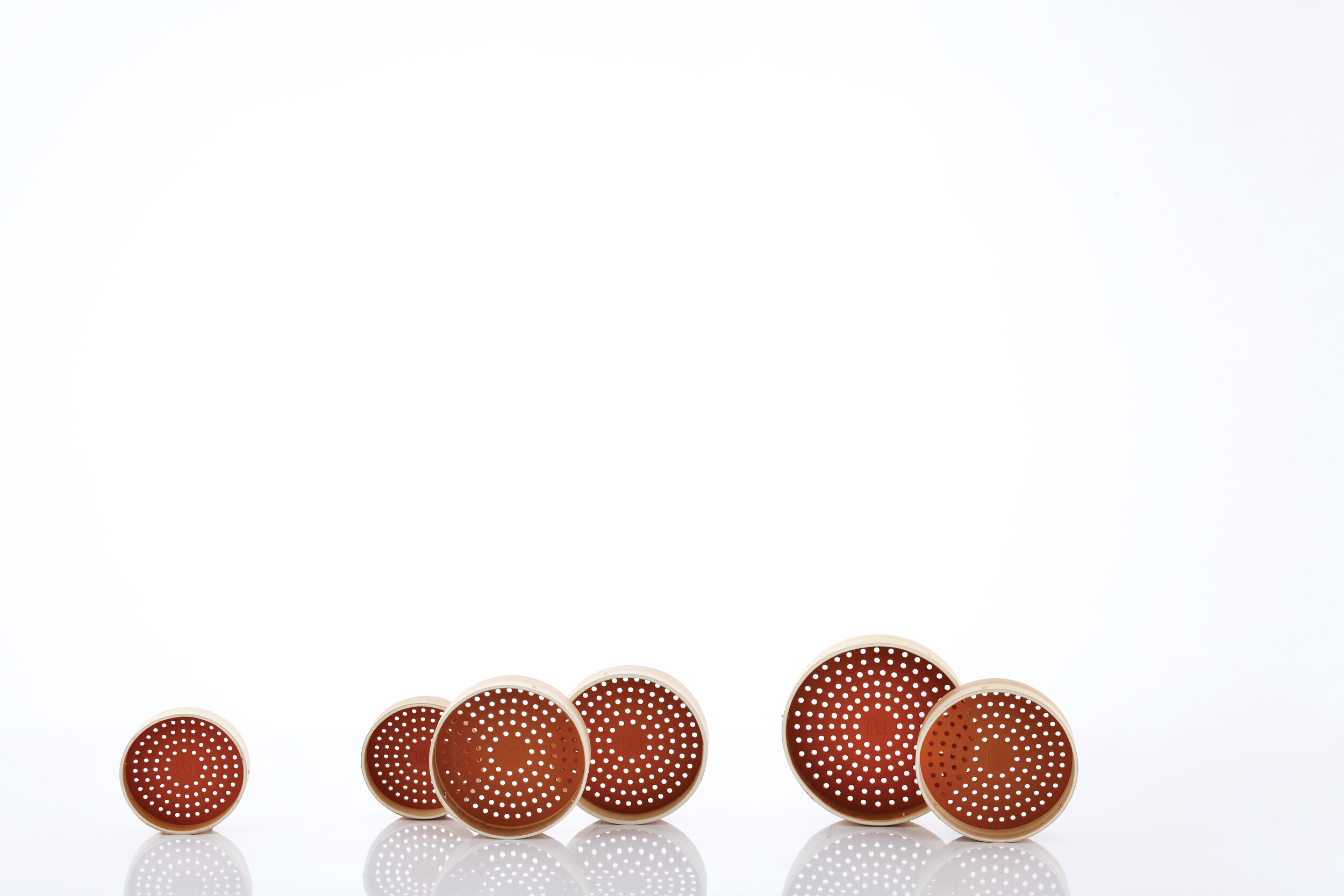
The method of steaming food was invented during the Han Dynasty thousands of years ago. Legend has it that General Han Xin made cooking utensils from bamboo and wood to cook food with steam. Through history, steaming has evolved to be one of the most iconic and essential cooking techniques in the Chinese culinary lexicon.
The steamer basket replaces the traditional bamboo base with terracotta. This natural material has efficient liquid absorbing characteristics, meaning it can absorb any excess moisture generated during steaming, ensuring that the food is perfectly moist.
The steamer pot and lid are made from fireproof ceramic, which has excellent heat resistance compared to regular stoneware, making it less likely to crack at higher temperatures. The JIA steamer pot can be used on open flame gas stoves and in both conventional and microwave ovens.
Materials : Cedar wood, Terra cotta
Designer : Office for Product Design
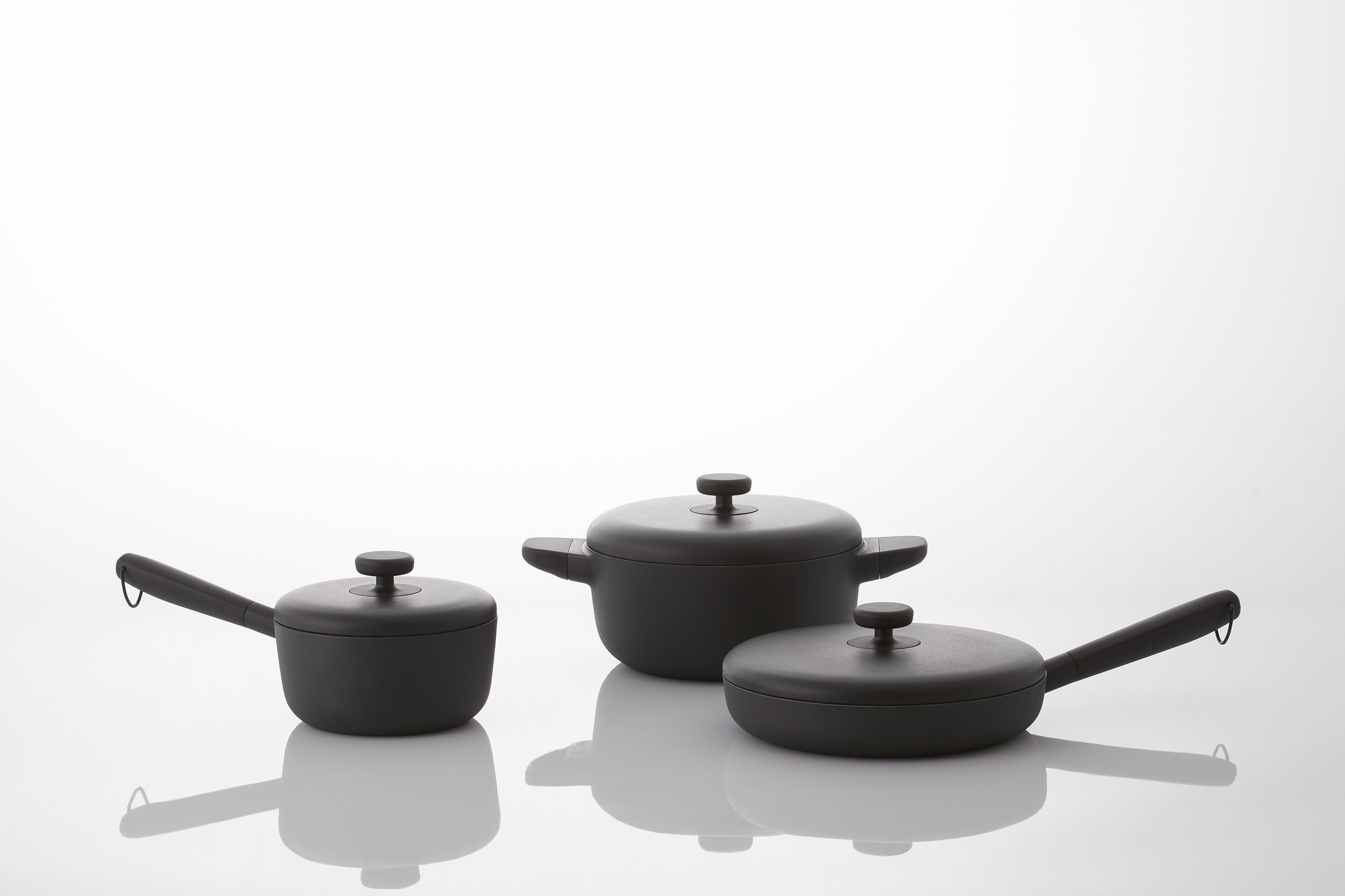
Cookware is used in everyday life to create the taste found in home-cooked food. Fine cast texture, lightweight aluminum, simple lines and graceful curves come together in the design that feels just right. The rustic, unpretentious, undisturbed and low-key style brings out the colors and the tastiness of cuisines. Cooking fumes and food aromas greet us: this is what home smells like!
The great Japanese industrial designer, Naoto Fukasawa, observed carefully the instincts and intuition when people prepare dishes using cooking tools and kitchen utensils, and designed cookware sets for JIA Inc. that are suitable for people to use at home. Three different models of cookware with three sets of cookware accessories are suitable for use in every kitchen.
They make it easier to create cuisines from around the world and to cook various everyday dishes that satisfy the tastes of every family member.
Materials:Cast aluminum, Bakelite, Teflon™ Profile / Nylon
Designer:Naoto Fukasawa
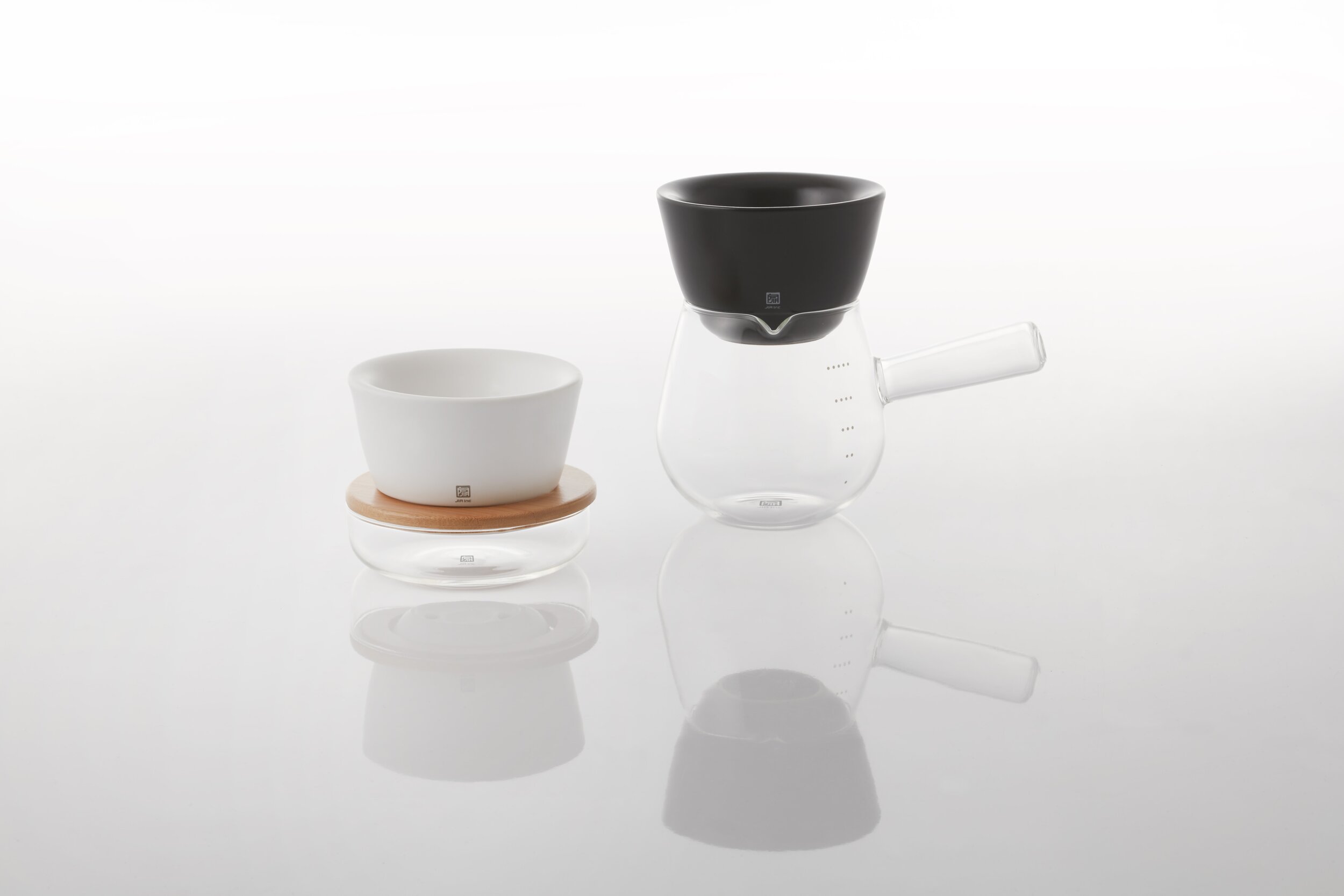
JIA hand drip coffee is carefully designed to fuse the eastern design language with western lifestyle while upgrading the function to bring a better coffee brewing experience and taste to daily life.
The JIA Inc. hand drip coffee includes two types of double-wall ceramic drippers, server, dripper sit & ring, together completes all you need for a cup of perfect coffee. The design of the double-wall porcelain dripper presents excellent heat retention and ensures an even brewing temperature and is also suitable for beginner to make an outstanding coffee.
Materials:Ceramic/ Mouth blown glass/ Bamboo
Designer:Shikai Tseng
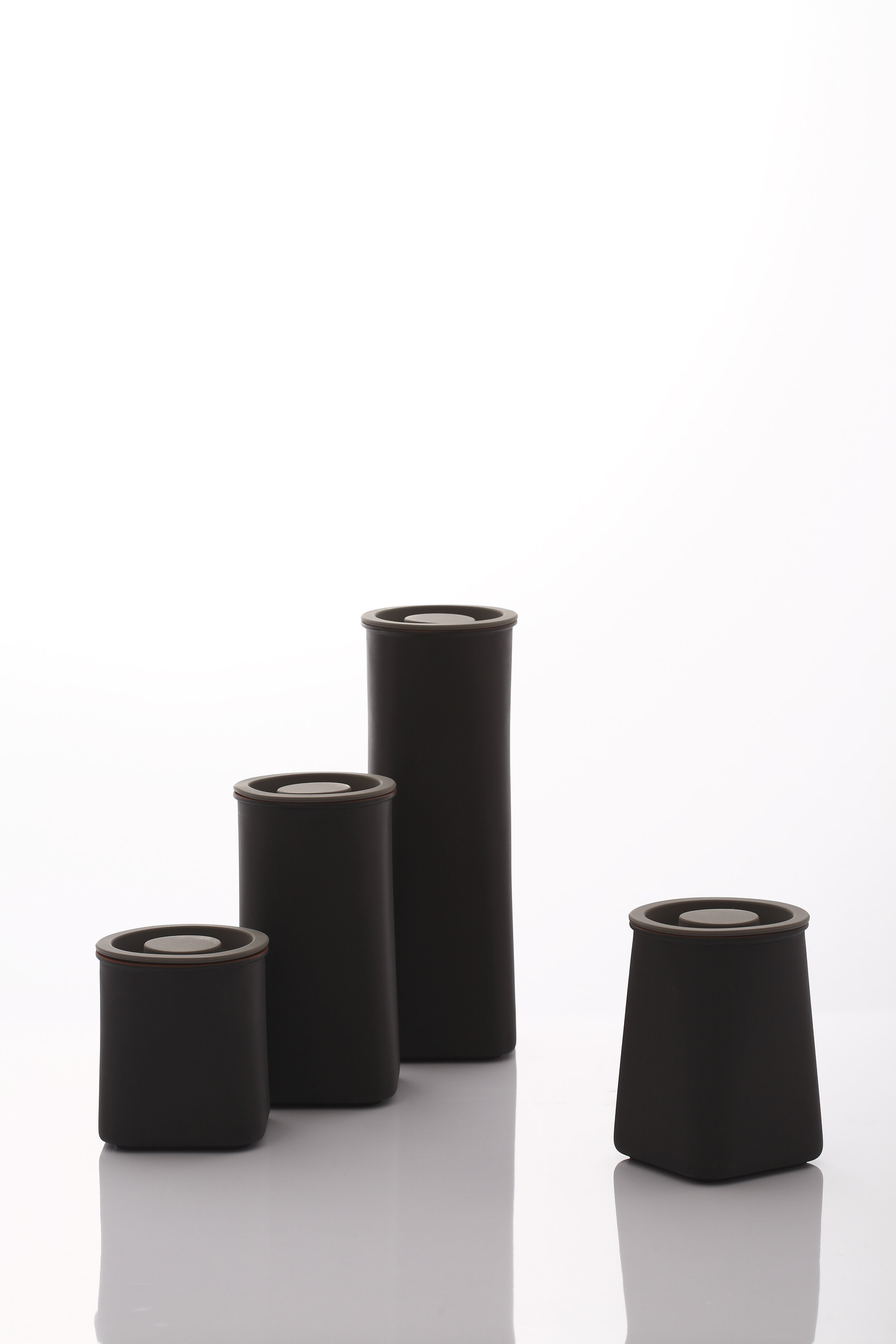
“滿”,meaning “abundance”, is a happy word in Chinese culture. It is often written in calligraphy on a piece of red paper and stuck outside of rice containers in the beginning of a new year to wish for a good year. While one of the key Chinese philosophies describes that the earth is square and the heaven is round to manifest the stability and the mobility, the yin and yang, designer Kate takes the line and uses terra cotta and silicone lid to translate the thinking into modern airtight canisters with a touch of Zen. Also, with a whisk of imagination, you can turn them into a sleek vase.
Materials :Terra cotta, Silicone
Designer:KateChungDesign
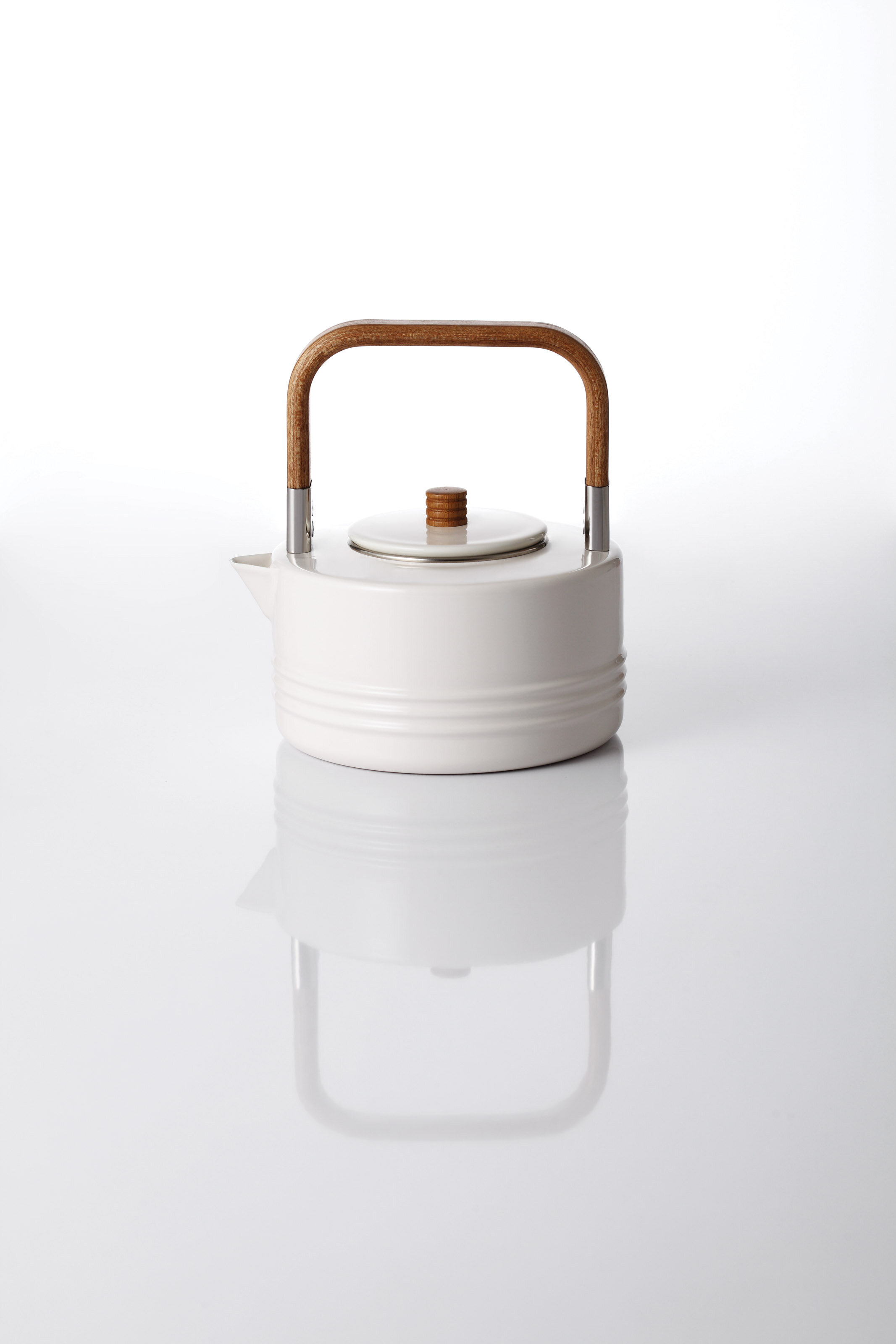
Enamel, a prestige material in both Western and Eastern world, is often associated with the royal family. Following the design language with the original National Palace Museum x JIA Inc. String tea set, the string kettle is made of enamel on steel with a warm and elegant white finish. Accompanied with tea pot, tea cup and Chai-Hai of the String Tea set, the String Enamel Kettle is here to enhance and complete your Gong-fu tea ceremony.
Materials:Enamel on steel, plywood with bamboo veneer, stainless steel, silicone, stainless steel 18/8 screw
Designer:Gearlab
iF Design Award
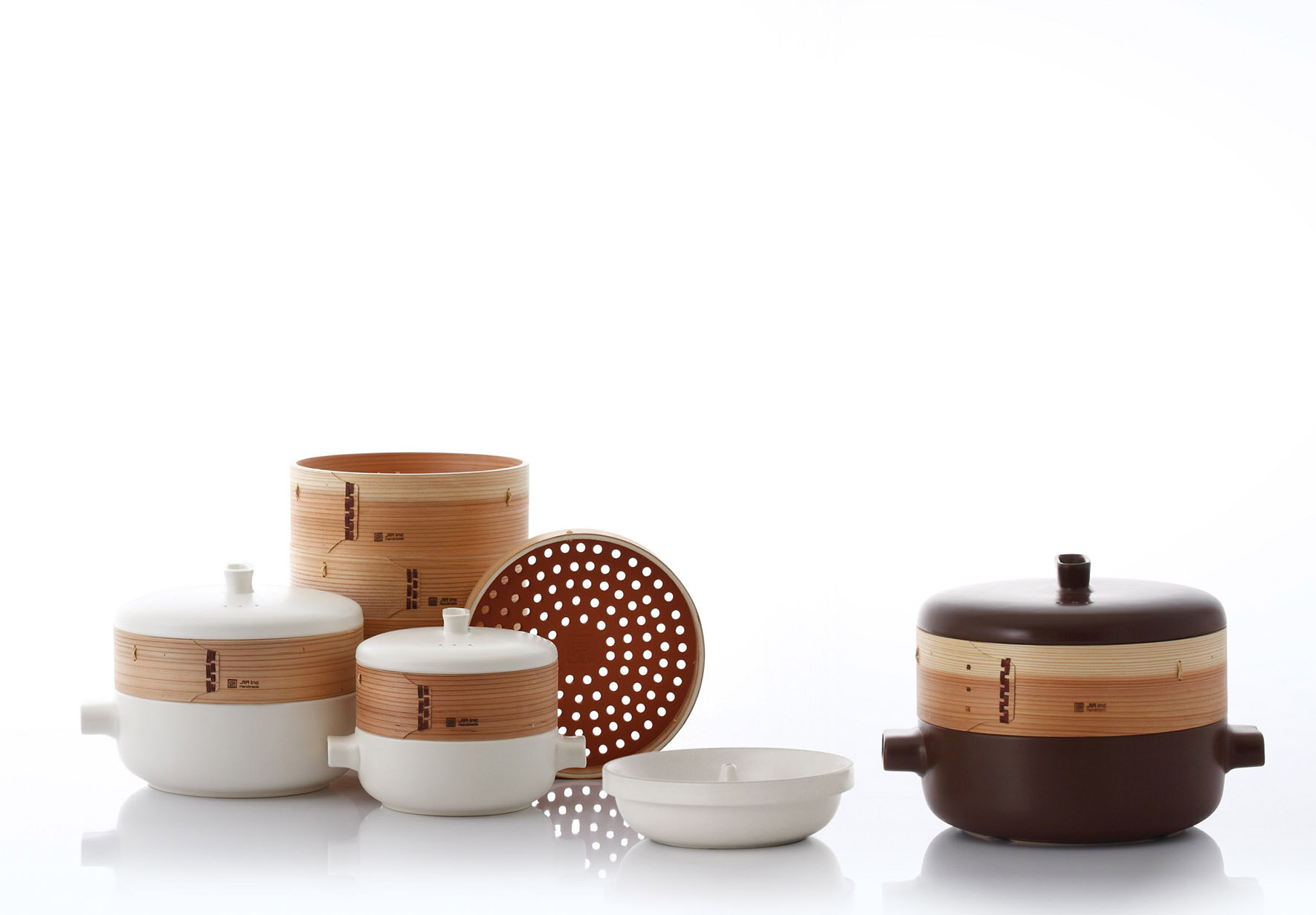
The JIA Steamer with terracotta steamer basket can steam and boil at the same time. Save time and space. The casserole also works perfectly as a simple stew pot.
The method of steaming food was invented during the Han Dynasty thousands of years ago. Legend has it that General Han Xin made cooking utensils from bamboo and wood to cook food with steam. Through history, steaming has evolved to be one of the most iconic and essential cooking techniques in the Chinese culinary lexicon.
The steamer pot and lid are made from fireproof ceramic, which has excellent heat resistance compared to regular stoneware, making it less likely to crack at higher temperatures. The JIA steamer pot can be used on open flame gas stoves and in both conventional and microwave ovens.
Materials:Fireproof ceramic
Designer:Office for Product Design
The method of steaming food was invented during the Han Dynasty thousands of years ago. Legend has it that General Han Xin made cooking utensils from bamboo and wood to cook food with steam. Through history, steaming has evolved to be one of the most iconic and essential cooking techniques in the Chinese culinary lexicon.
The steamer basket replaces the traditional bamboo base with terracotta. This natural material has efficient liquid absorbing characteristics, meaning it can absorb any excess moisture generated during steaming, ensuring that the food is perfectly moist.
The steamer pot and lid are made from fireproof ceramic, which has excellent heat resistance compared to regular stoneware, making it less likely to crack at higher temperatures. The JIA steamer pot can be used on open flame gas stoves and in both conventional and microwave ovens.
Materials : Cedar wood, Terra cotta
Designer : Office for Product Design
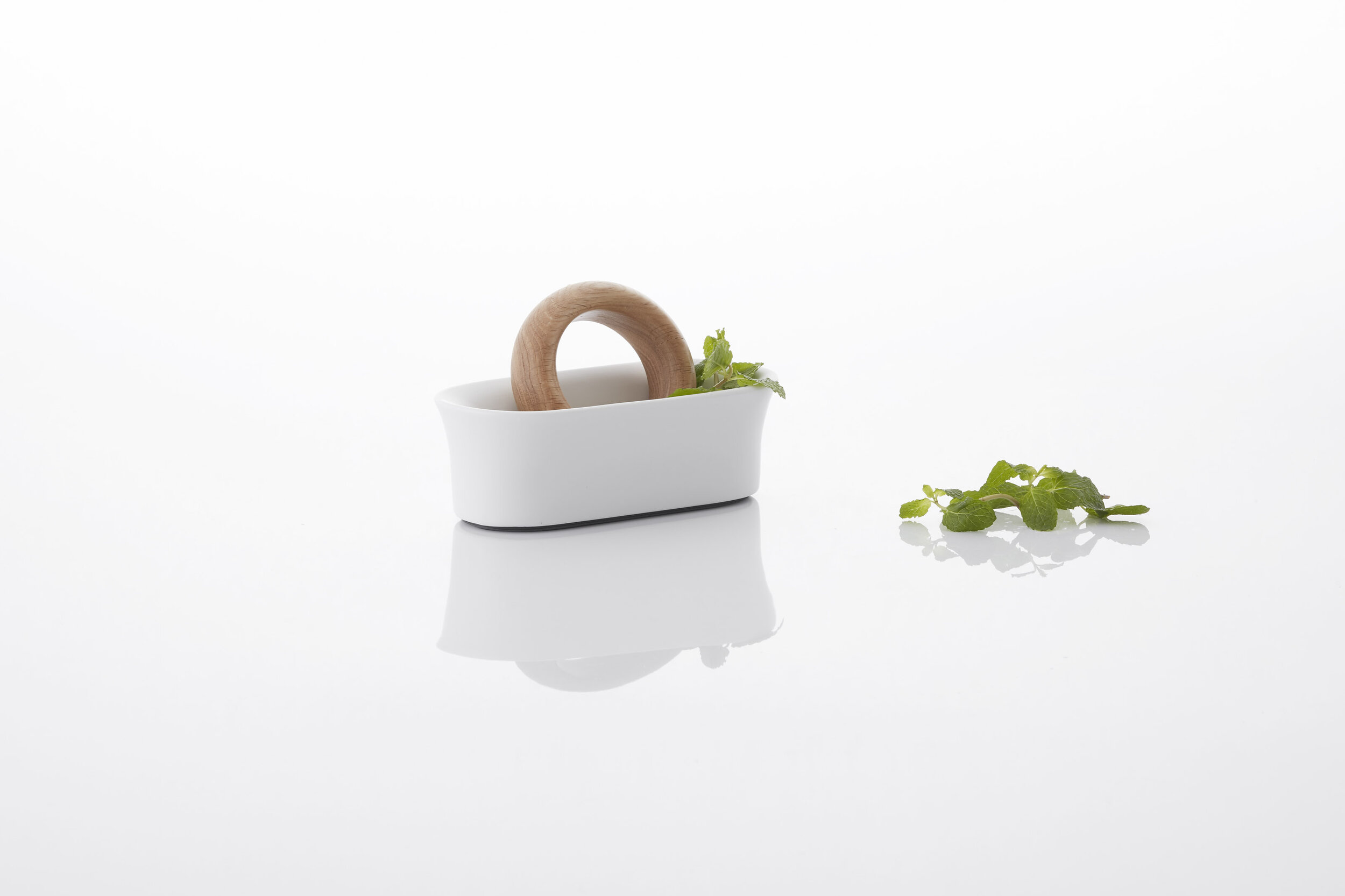
The more the wheel roles, the more flavorful life is. The more flavorful life is, the closer you are to home. Just a few rolls from the wooden wheel pestle, keeps homemade flavors on your mind.
Inspired by Chinese ancient ceramic tea mortars, “The Prep, Rolling Mortar” is designed to crush mixed spices, tea leaves, Chinese herb medicines, and so on. Prepping for meals or condiments, it’s as easy as rolling of a mortar.
Materials:Porcelain, Oak, Silicone
Designer:JIA Design Team – Spencer Hung

Bamboo meets Porcelain. Made Purely by Hand Bamboo and porcelain, two quintessentially warm Chinese materials, are combined through innovative techniques and made purely by hand to create tableware suitable for contemporary use. Chinese love to eat. Besides that, Chinese love to eat with a full table, with everything served and on display at the same time. These family bowls share a simple slanted rim. The combination of porcelain and bamboo creates warmth and love for a family meal.
Materials:Porcelain, Bamboo
Designer:designschneider
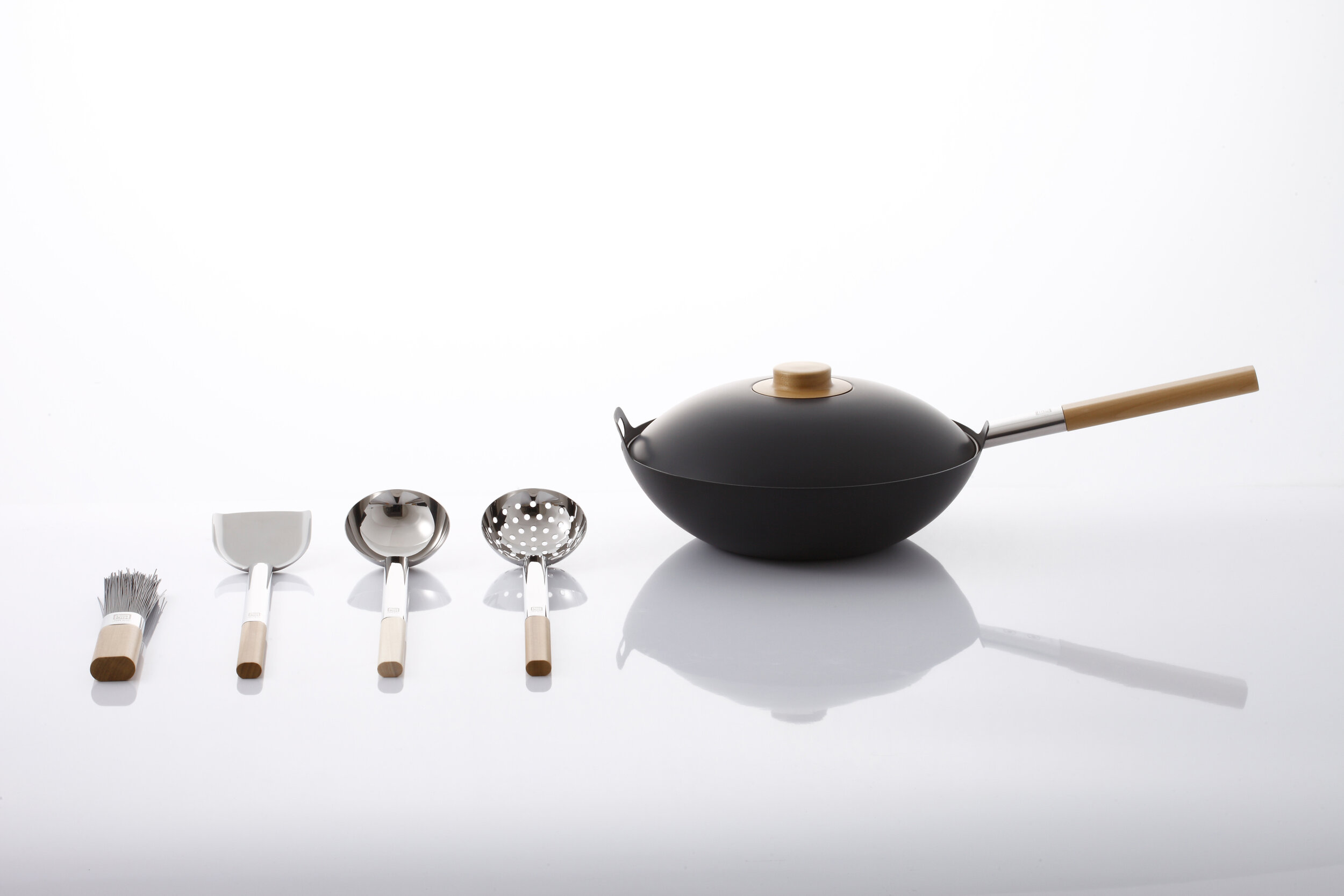
A truly authentic wok designed for use in the modern home.
Authenticity is the keyword for the Wok and Utensils designed by Office for Product Design. Carbon steel, stainless steel and natural magnolia wood are beautifully crafted together in harmony. Carbon steel is a material long used for making woks. It is strong, durable and conducts heat quickly and evenly. No artificial coating is used, meaning it can be seasoned to create a natural non-stick coating.
Magnolia grows slowly and gives a wood characterized for its strength, density and hardness. The designer chose it to go with carbon steel to form this unpretentious, highly functional wok design. The Wok and utensils invites you to try out creative Chinese home cuisine and makes a pleasing focal point when presented on the table.
Materials:Carbon steel, Magnolia wood, 18/10 Stainless Steel
Designer:Office for Product Design
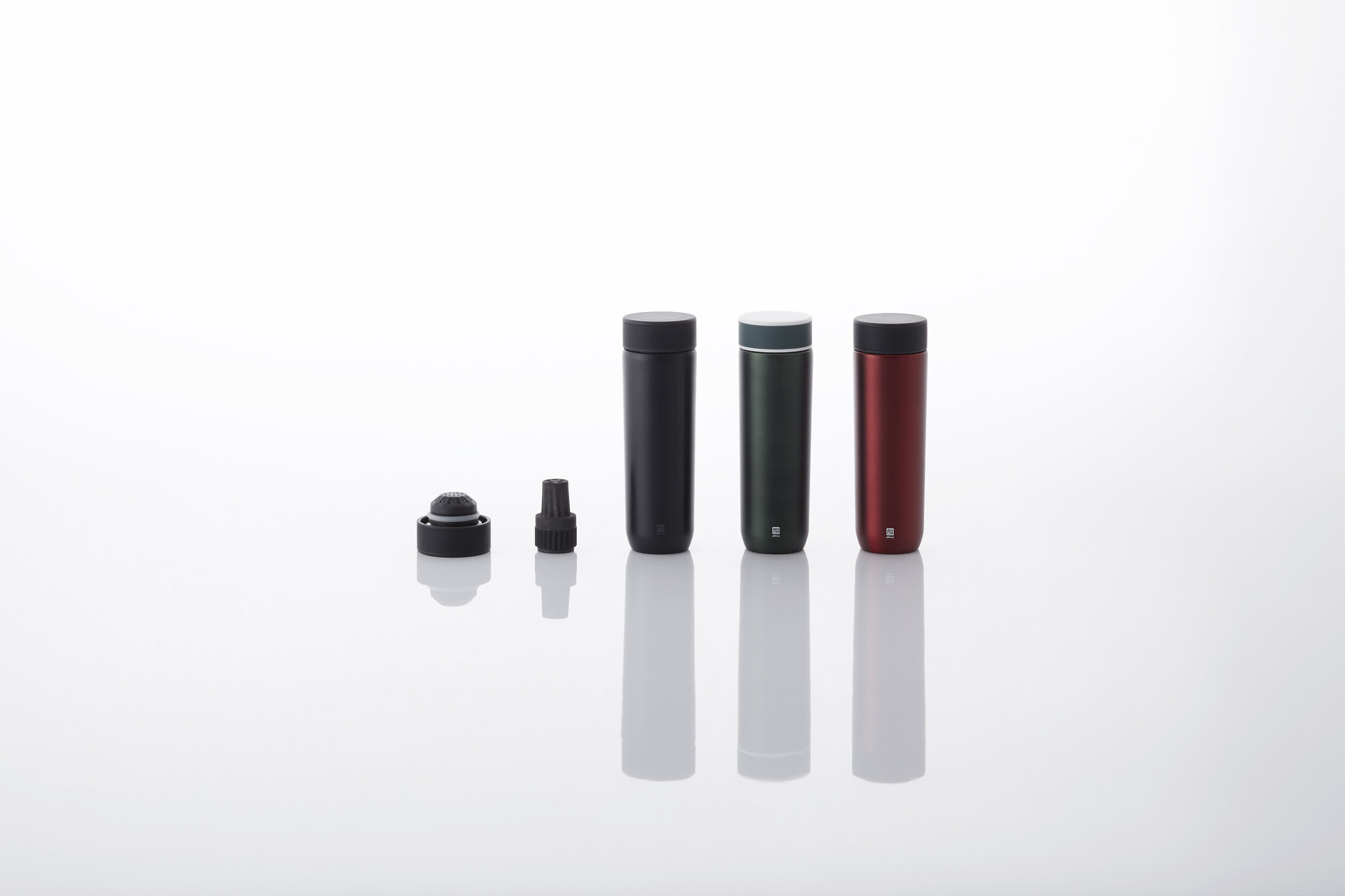
Where there is water, there is life. Life is originated from water and water is of major importance of all living things. Water is, seen as the basic of all materials and essential to all forms of life. 【Guanzi.Shui Di】Water nourishes all beings; the existence of all depends on water. It is no longer a luxury to have quality water at your disposal whether at work, at home or on a trip. The JIA Inc. Bamboo Charcoal Ceramic Filter Bottle features a filter core, when immersed in water; it will balance the pH value, purify impurities and soften the water to make it taste even better. The bottle features a double-walled vacuumed insulated stainless steel body and a leak-proof lid to keep your water at your desired temperature for up to 6 hours.
Materials :Dual layered SS304 stainless steel, polypropylene plastic, food-grade silicon,
bamboo charcoal, ceramic
Designer:JIA Design Team – Wayne Yang
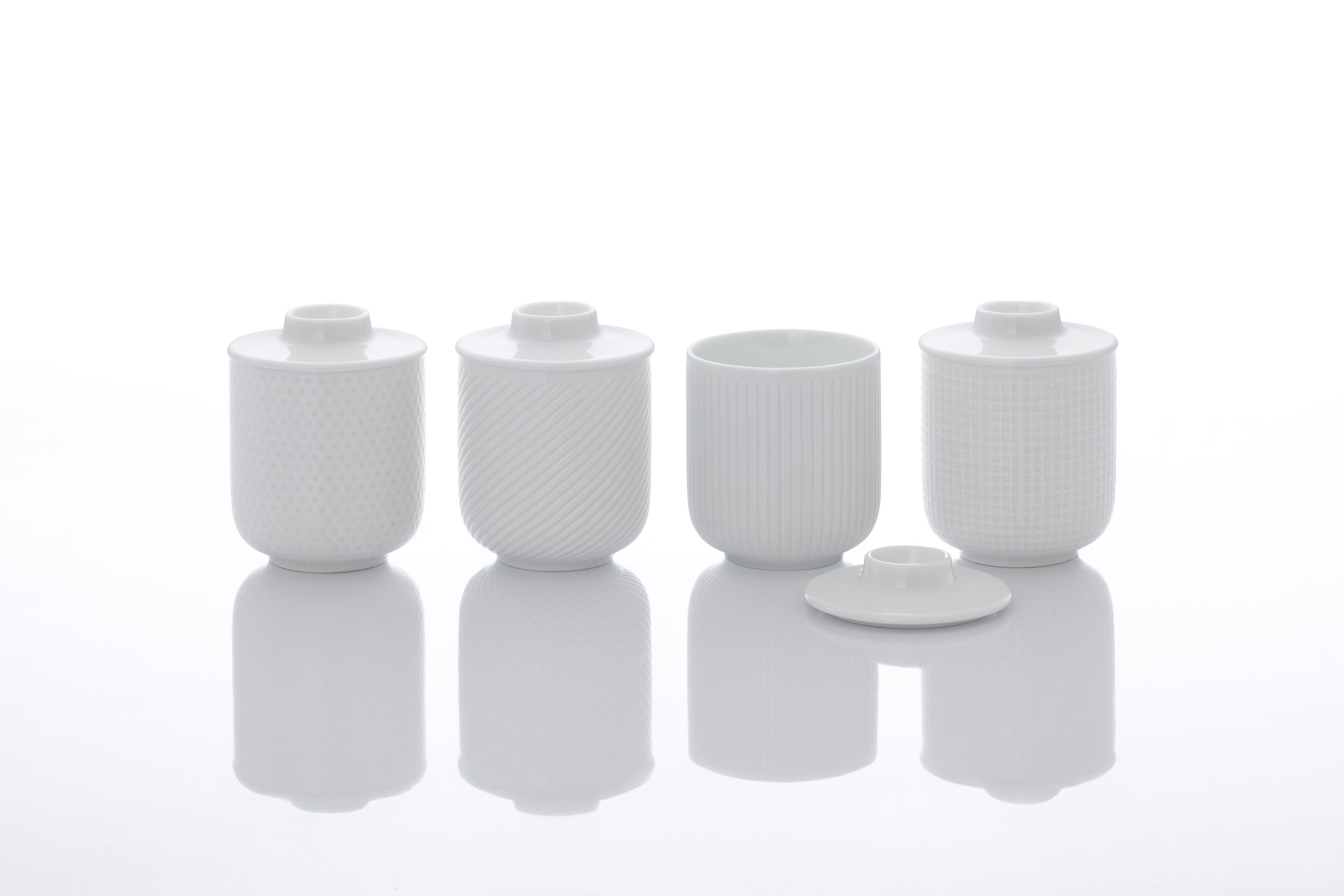
A family of simple teacups which initially seem identical but soon show their own subtle personality. The basic silhouette of 'Persona' is a contemporary reinterpretation of the traditional Chinese tea cup with lid. Closer inspection reveals a series of individual texture like patterns which are almost more tactile than visual.
The true quality of these cups are only fully appreciated once held in the hand or up against the light, when the translucency of the delicate porcelain accentuatesthe patterns.
Materials:Porcelain
Designer:Office for Product Design
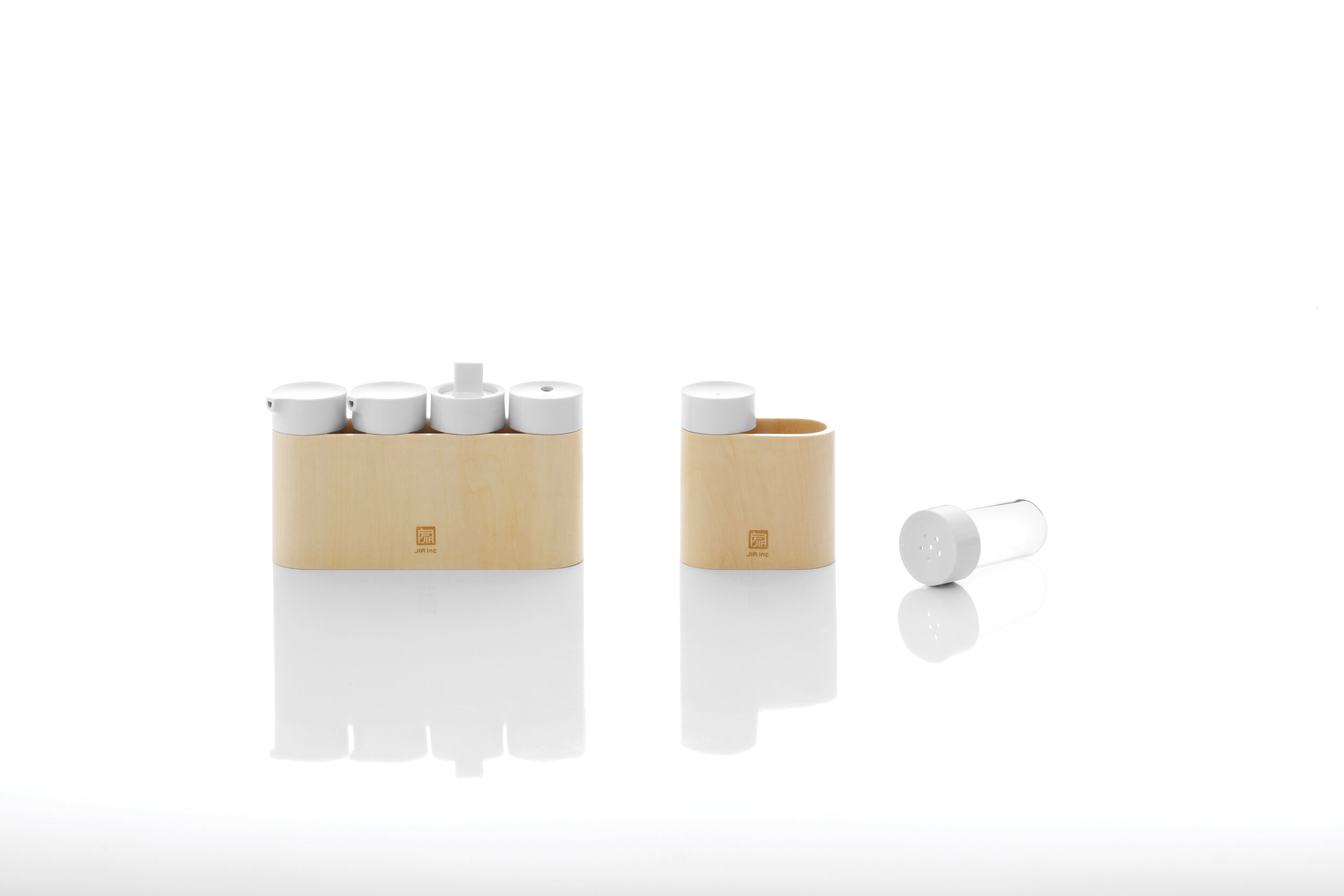
'Taste' is a tabletop condiment set which allows for a wide range of seasoning and condiments to be assembled to suit individual taste and culinary customs - Western and Asian alike. Various tops can be combined to allow for different types of condiments, including salt, pepper, oil, vinegar, chilli and spices. 'Taste' can even accommodate tooth picks which are commonly found alongside the condiments. Hiding the transparent glass bottles in a plywood stand, the condiment set invites discovery. Ingeniously, the round-bottom design of the bottles prevents them from standing on their own, prompting the user to return them to the stand after use and that way ensuring the table remains orderly and uncluttered.
Materials:Glass, Plastic, Playwood with basswood veneer
Designer:Office for Product Design
文創精品獎
The JIA Steamer with terracotta steamer basket can steam and boil at the same time. Save time and space. The casserole also works perfectly as a simple stew pot.
The method of steaming food was invented during the Han Dynasty thousands of years ago. Legend has it that General Han Xin made cooking utensils from bamboo and wood to cook food with steam. Through history, steaming has evolved to be one of the most iconic and essential cooking techniques in the Chinese culinary lexicon.
The steamer pot and lid are made from fireproof ceramic, which has excellent heat resistance compared to regular stoneware, making it less likely to crack at higher temperatures. The JIA steamer pot can be used on open flame gas stoves and in both conventional and microwave ovens.
Materials:Fireproof ceramic
Designer:Office for Product Design
The method of steaming food was invented during the Han Dynasty thousands of years ago. Legend has it that General Han Xin made cooking utensils from bamboo and wood to cook food with steam. Through history, steaming has evolved to be one of the most iconic and essential cooking techniques in the Chinese culinary lexicon.
The steamer basket replaces the traditional bamboo base with terracotta. This natural material has efficient liquid absorbing characteristics, meaning it can absorb any excess moisture generated during steaming, ensuring that the food is perfectly moist.
The steamer pot and lid are made from fireproof ceramic, which has excellent heat resistance compared to regular stoneware, making it less likely to crack at higher temperatures. The JIA steamer pot can be used on open flame gas stoves and in both conventional and microwave ovens.
Materials : Cedar wood, Terra cotta
Designer : Office for Product Design
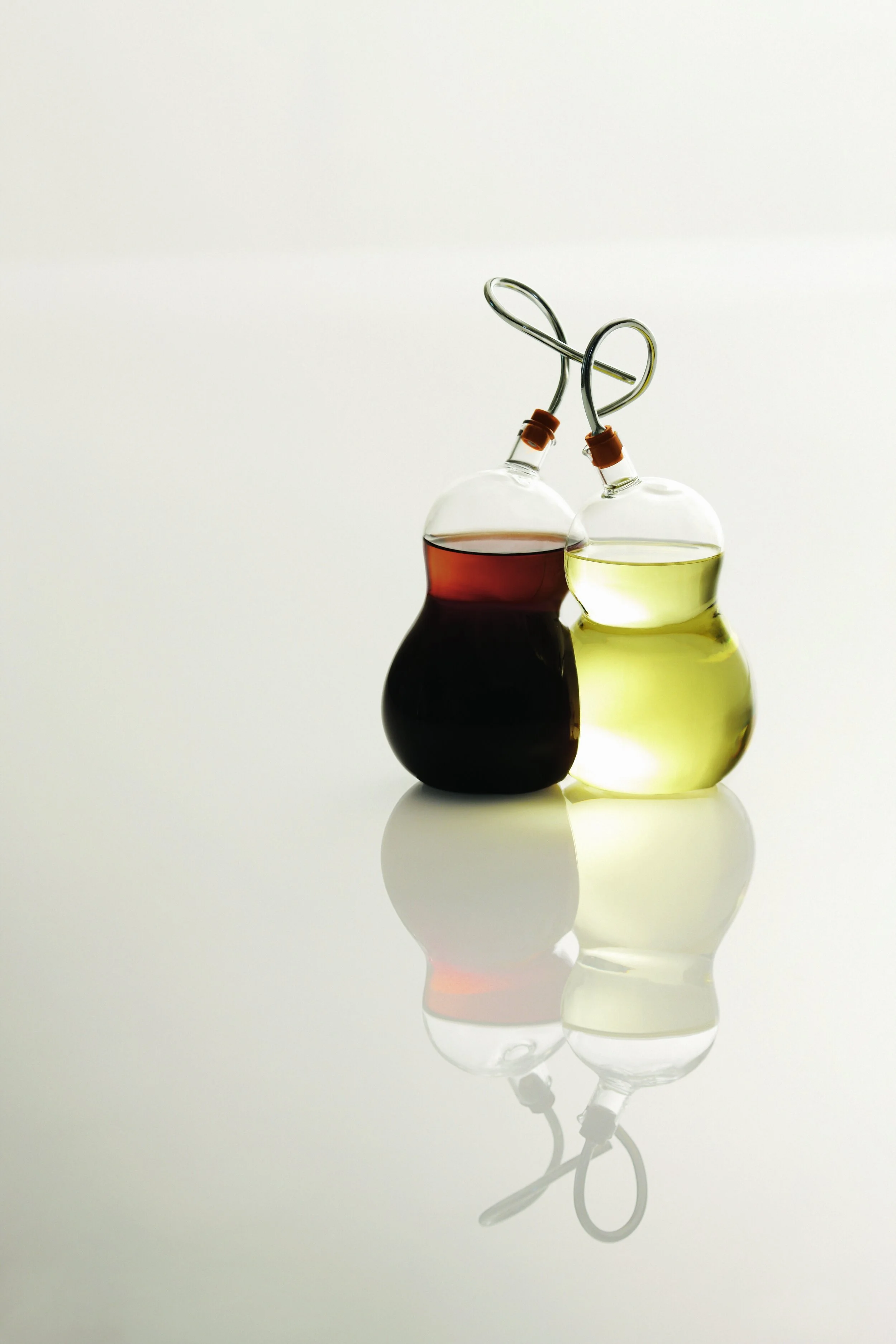
In the past, farmers from Northern China used naturally dried HULUs (gourds) to scoop water and wash rice. Tableware and eating utensils were considered essential family belongings that connected everyone to the same table, symbolizing harmony and a sense of home.
In this re-interpretation of the oil and vinegar set, flowing and intersecting lines are cleverly incorporated into the curvatures of the gourd. HULU Pas de Deux portrays a couple caressing forms in dance and implies a link to the Chinese character囍(Xi), “double happiness”.
Materials:Mouth blown glass, Stainless steel, Silicone
Designer:Yung-Ho Chang / FCJZ
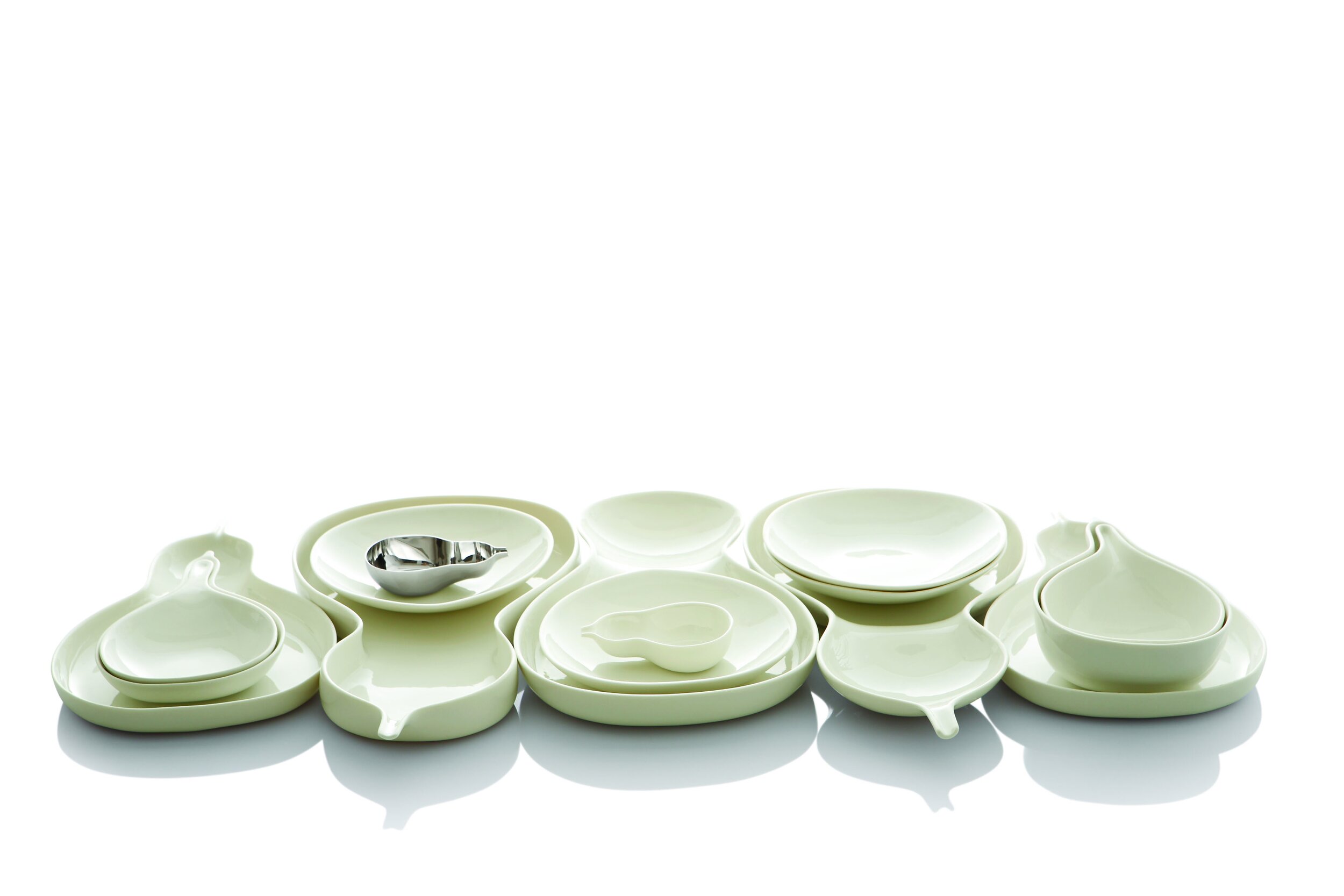
In the past, farmers from Northern China used naturally dried HULUs (gourds) to scoop water and wash rice. Tableware and eating utensils were considered essential family belongings that connected everyone to the same table, symbolizing harmony and a sense of home.
Today, people acquire material desires too easily, losing the sense of attachment to ordinary objects. JIA Inc. reinvents traditional family objects using porcelain to give new meaning to simple, rustic utensils and to encourage the reflection of the true meaning of family and home.
Designer Yung-Ho Chang breaks the rule of 6 by 6 dinnerware set. These organic shape plates offer an alternative way of preparing and sharing food in your own creative way.
Materials:Porcelain
Designer:Yung-Ho Chang/FCJZ
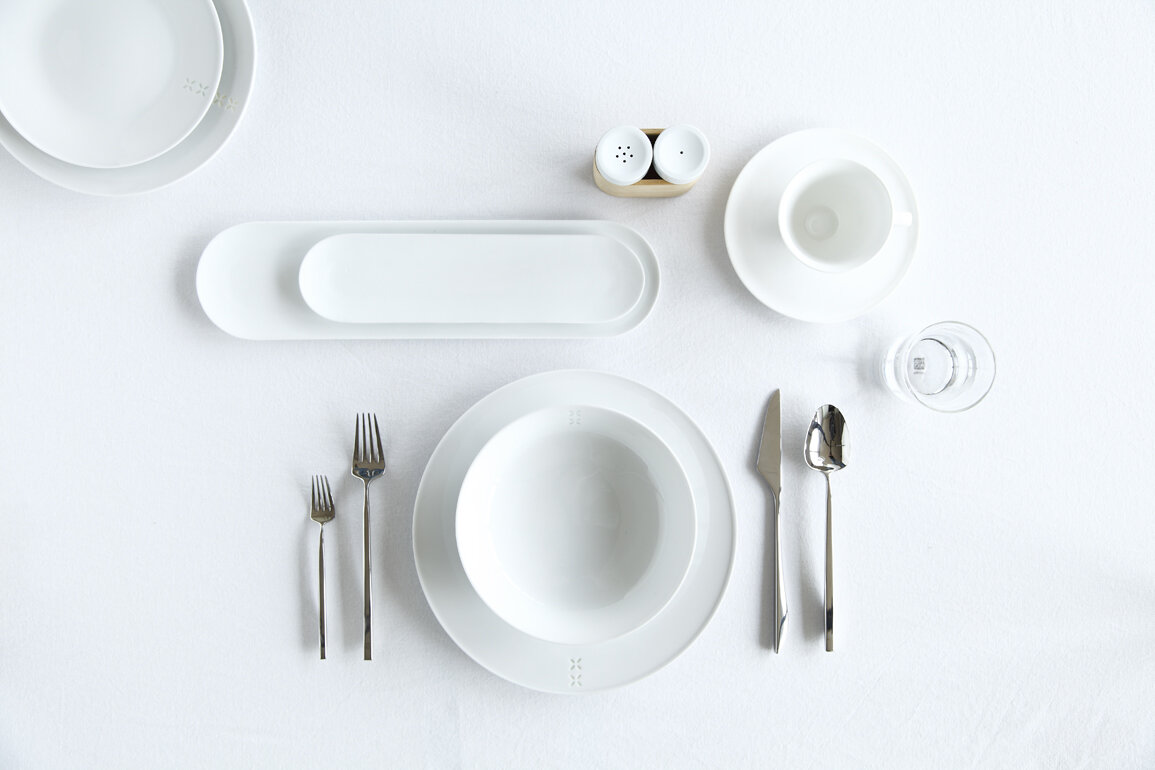
Designer uses the strong calligraphic lines of Shou Jing Ti, a font created by Emperor Song Hui Zong (1082 AD-1135 AD), in the design of this cutlery set. A crafted balance between the sturdiness of stainless steel with the art of Chinese calligraphy is created and the lines of the handles echo bold brushstrokes.
Materials:18/10 Stainless Steel
Designer:KateChungDesign
Enamel, a prestige material in both Western and Eastern world, is often associated with the royal family. Following the design language with the original National Palace Museum x JIA Inc. String tea set, the string kettle is made of enamel on steel with a warm and elegant white finish. Accompanied with tea pot, tea cup and Chai-Hai of the String Tea set, the String Enamel Kettle is here to enhance and complete your Gong-fu tea ceremony.
Materials:Enamel on steel, plywood with bamboo veneer, stainless steel, silicone, stainless steel 18/8 screw
Designer:Gearlab
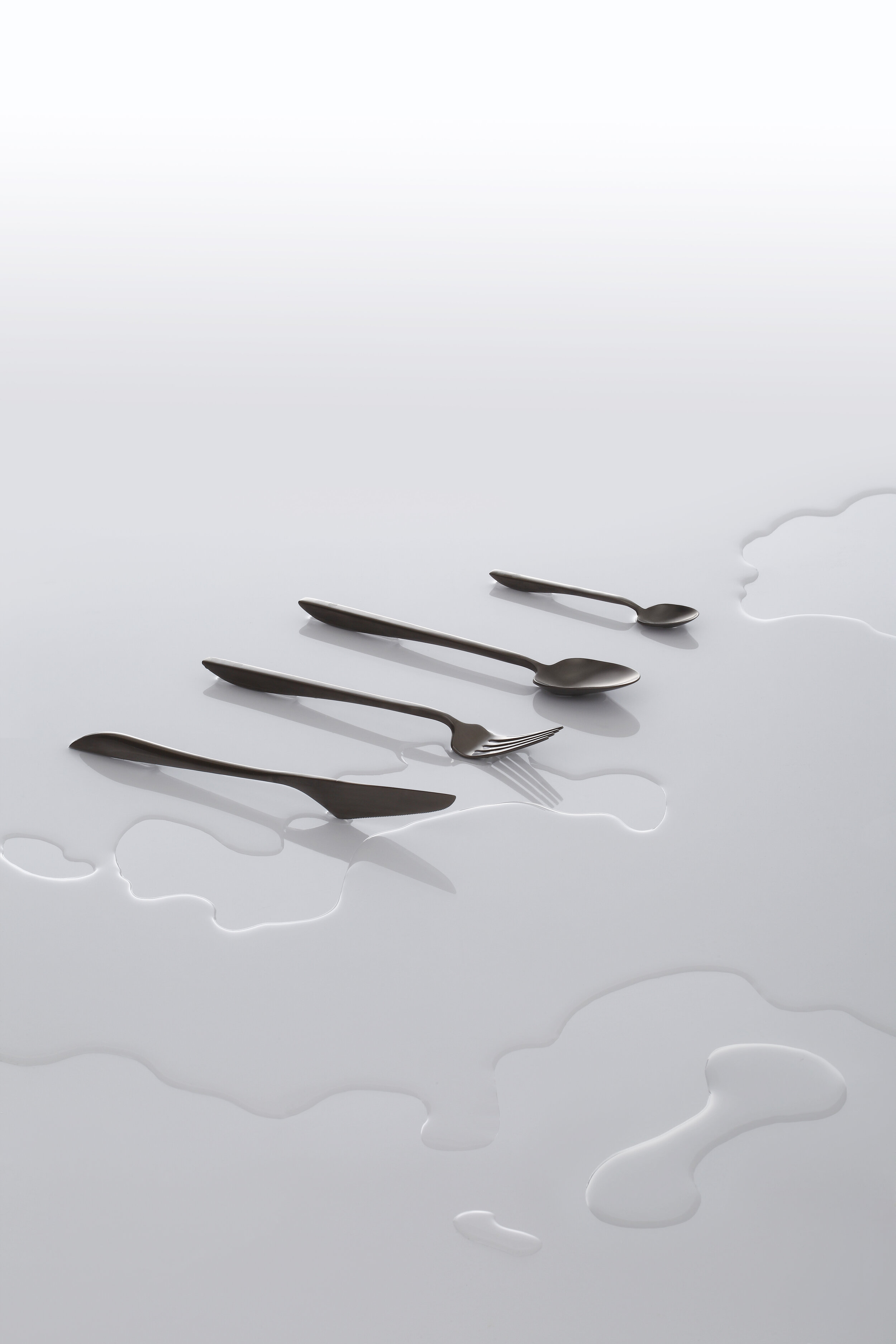
JIA Inc. in collaboration with National Palace Museum, With modern design approaches, JIA Inc. attempts to across the boundaries between royal artefacts and daily objects and offers an alternative translation on classics from emperors’ house to items accessible in modern days.
Designer uses the strong calligraphic lines of Shou Jing Ti, a font created by Emperor Song Hui Zong(1082 AD- 1135 AD), in the design of this cutlery set. A crafted balance between the sturdiness of stainless steel with the art of Chinese calligraphy is created and the lines of handles echo bold brushstrokes.
Materials:Stainless steel, PVD coating
Designer:KateChungDesign

Seasoning your meal with Emperor’s taste! The hollow design of the oil and vinegar bottles provides a better grip. The valve on the top makes it easier for dropping seasonings.
Materials:Porcelain, Stainless steel , Silicone
Designer:Wong Chi Fung
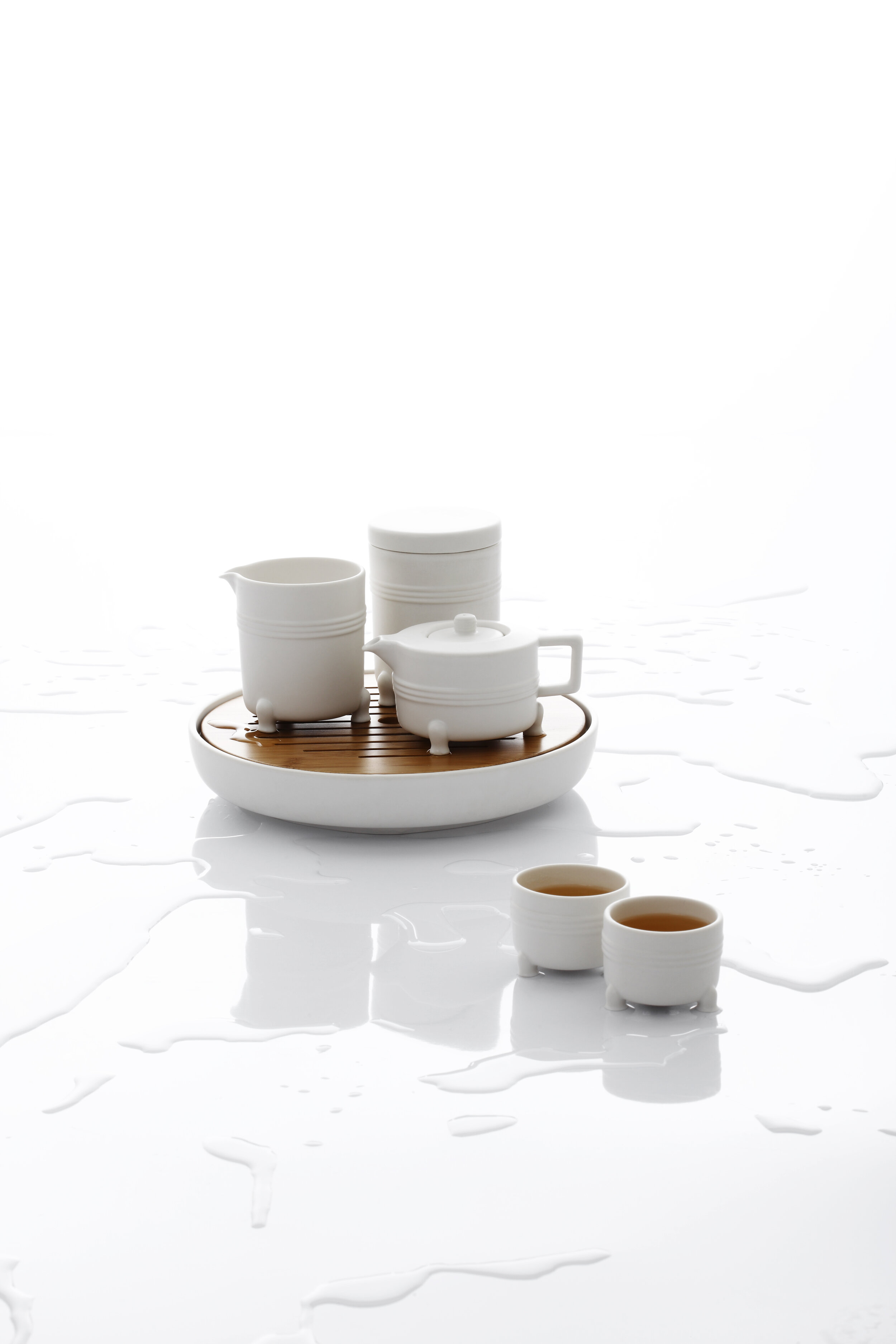
A full set of tea utensils to provide an excellent Chinese tea experience. The string pattern is not only decorative. It also prevents user from slippery and heat when brewing a nice cup of tea.
Materials:Porcelain, Cork, Bamboo
Designer:Gearlab
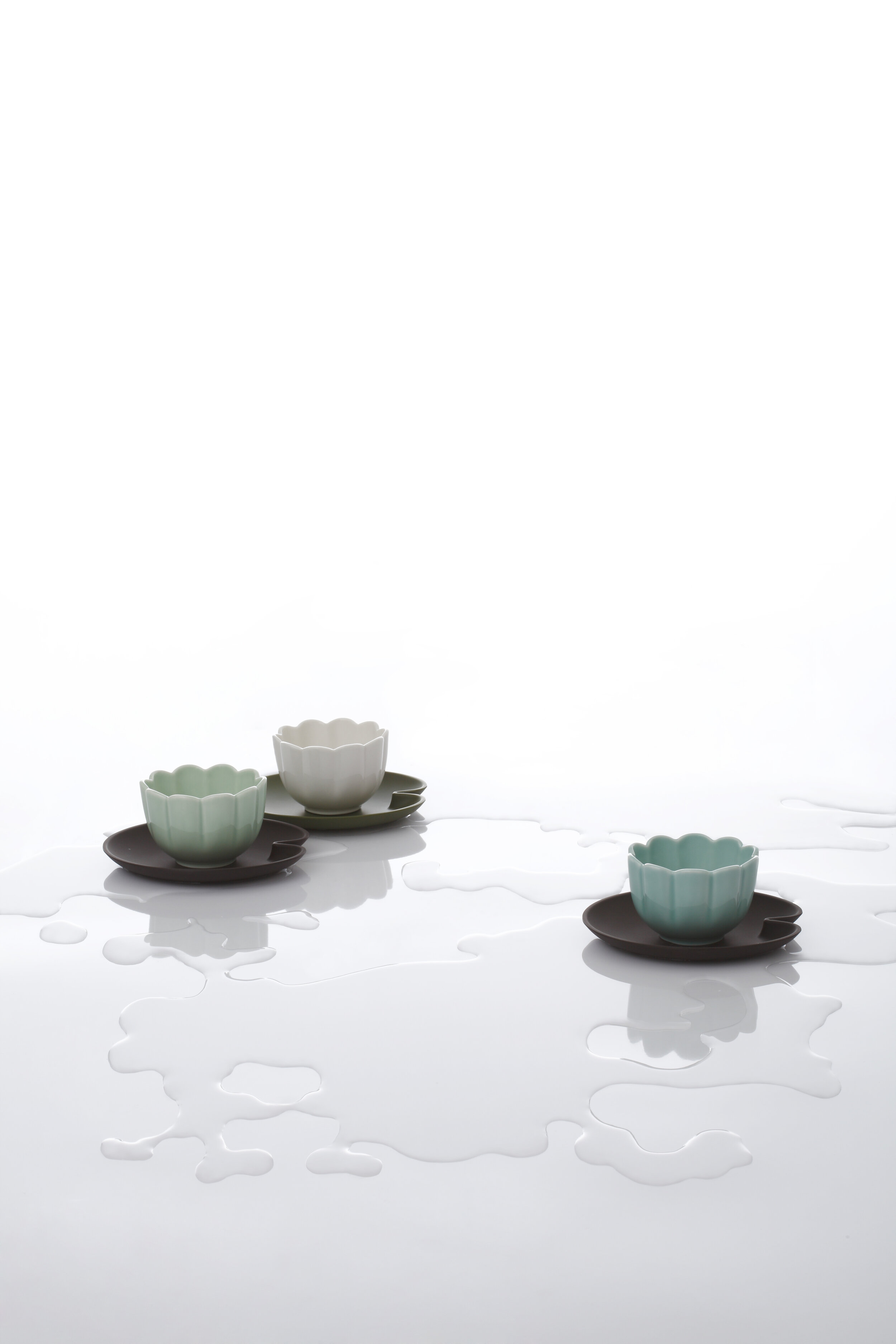
The silicone ring on the bottom of the bowl functions as an anti-slip and heat insulation coaster. The tranquil lotus-shaped bowl and lively leaf-shaped plate create various combinations of usages.
Materials:Porcelain, Silicone, Melamine
Designer:KateChungDesign
金點設計獎
The JIA Steamer with terracotta steamer basket can steam and boil at the same time. Save time and space. The casserole also works perfectly as a simple stew pot.
The method of steaming food was invented during the Han Dynasty thousands of years ago. Legend has it that General Han Xin made cooking utensils from bamboo and wood to cook food with steam. Through history, steaming has evolved to be one of the most iconic and essential cooking techniques in the Chinese culinary lexicon.
The steamer pot and lid are made from fireproof ceramic, which has excellent heat resistance compared to regular stoneware, making it less likely to crack at higher temperatures. The JIA steamer pot can be used on open flame gas stoves and in both conventional and microwave ovens.
Materials:Fireproof ceramic
Designer:Office for Product Design
The method of steaming food was invented during the Han Dynasty thousands of years ago. Legend has it that General Han Xin made cooking utensils from bamboo and wood to cook food with steam. Through history, steaming has evolved to be one of the most iconic and essential cooking techniques in the Chinese culinary lexicon.
The steamer basket replaces the traditional bamboo base with terracotta. This natural material has efficient liquid absorbing characteristics, meaning it can absorb any excess moisture generated during steaming, ensuring that the food is perfectly moist.
The steamer pot and lid are made from fireproof ceramic, which has excellent heat resistance compared to regular stoneware, making it less likely to crack at higher temperatures. The JIA steamer pot can be used on open flame gas stoves and in both conventional and microwave ovens.
Materials : Cedar wood, Terra cotta
Designer : Office for Product Design
The more the wheel roles, the more flavorful life is. The more flavorful life is, the closer you are to home. Just a few rolls from the wooden wheel pestle, keeps homemade flavors on your mind.
Inspired by Chinese ancient ceramic tea mortars, “The Prep, Rolling Mortar” is designed to crush mixed spices, tea leaves, Chinese herb medicines, and so on. Prepping for meals or condiments, it’s as easy as rolling of a mortar.
Materials:Porcelain, Oak, Silicone
Designer:JIA Design Team – Spencer Hung
In the past, farmers from Northern China used naturally dried HULUs (gourds) to scoop water and wash rice. Tableware and eating utensils were considered essential family belongings that connected everyone to the same table, symbolizing harmony and a sense of home.
In this re-interpretation of the oil and vinegar set, flowing and intersecting lines are cleverly incorporated into the curvatures of the gourd. HULU Pas de Deux portrays a couple caressing forms in dance and implies a link to the Chinese character囍(Xi), “double happiness”.
Materials:Mouth blown glass, Stainless steel, Silicone
Designer:Yung-Ho Chang / FCJZ
Bamboo meets Porcelain. Made Purely by Hand Bamboo and porcelain, two quintessentially warm Chinese materials, are combined through innovative techniques and made purely by hand to create tableware suitable for contemporary use. Chinese love to eat. Besides that, Chinese love to eat with a full table, with everything served and on display at the same time. These family bowls share a simple slanted rim. The combination of porcelain and bamboo creates warmth and love for a family meal.
Materials:Porcelain, Bamboo
Designer:designschneider
A truly authentic wok designed for use in the modern home.
Authenticity is the keyword for the Wok and Utensils designed by Office for Product Design. Carbon steel, stainless steel and natural magnolia wood are beautifully crafted together in harmony. Carbon steel is a material long used for making woks. It is strong, durable and conducts heat quickly and evenly. No artificial coating is used, meaning it can be seasoned to create a natural non-stick coating.
Magnolia grows slowly and gives a wood characterized for its strength, density and hardness. The designer chose it to go with carbon steel to form this unpretentious, highly functional wok design. The Wok and utensils invites you to try out creative Chinese home cuisine and makes a pleasing focal point when presented on the table.
Materials:Carbon steel, Magnolia wood, 18/10 Stainless Steel
Designer:Office for Product Design
In the past, farmers from Northern China used naturally dried HULUs (gourds) to scoop water and wash rice. Tableware and eating utensils were considered essential family belongings that connected everyone to the same table, symbolizing harmony and a sense of home.
Today, people acquire material desires too easily, losing the sense of attachment to ordinary objects. JIA Inc. reinvents traditional family objects using porcelain to give new meaning to simple, rustic utensils and to encourage the reflection of the true meaning of family and home.
Designer Yung-Ho Chang breaks the rule of 6 by 6 dinnerware set. These organic shape plates offer an alternative way of preparing and sharing food in your own creative way.
Materials:Porcelain
Designer:Yung-Ho Chang/FCJZ
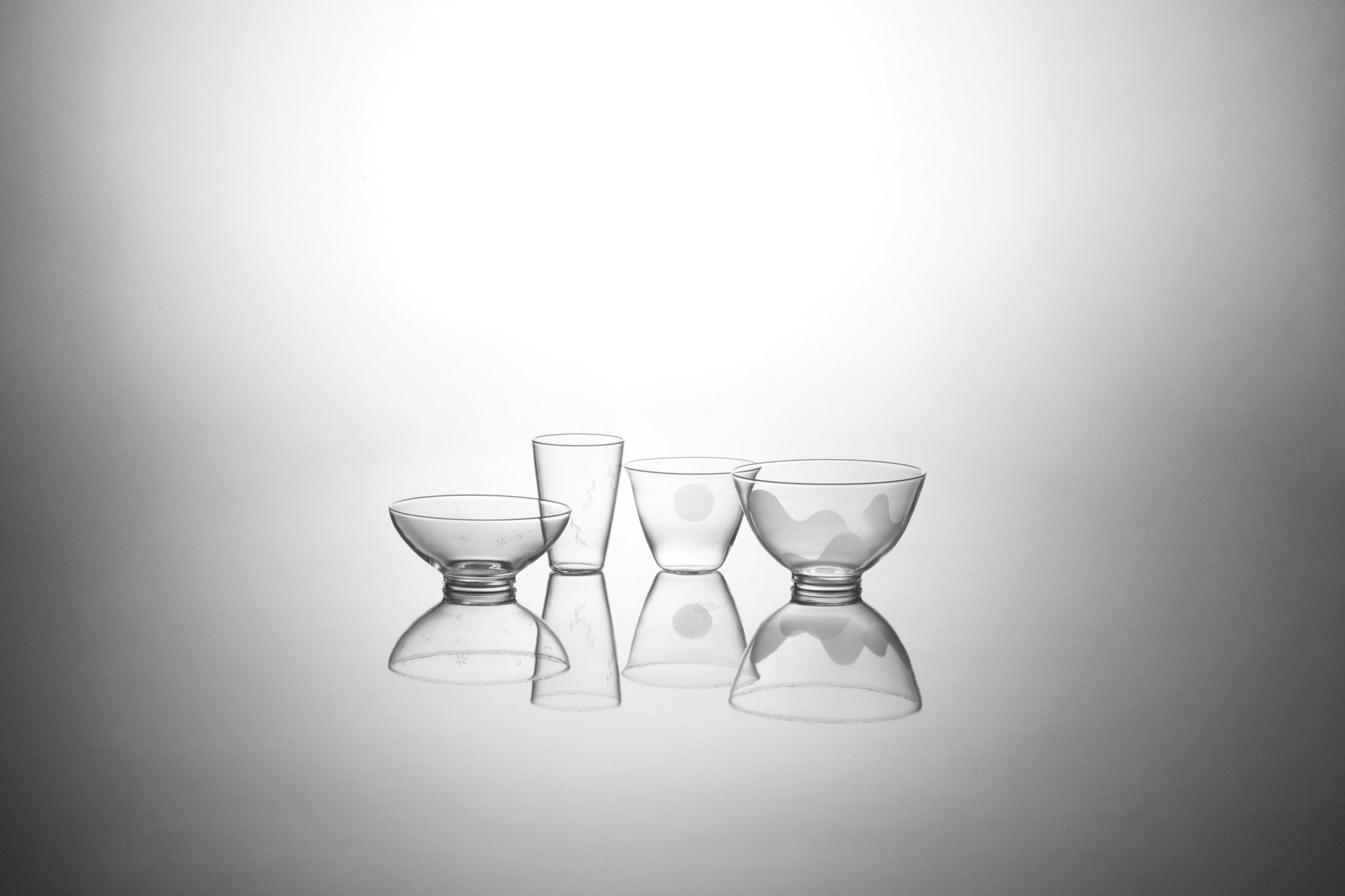
The melancholy of flowers is uncovered under light spring drizzle. Whilst willows in summer sway through the cool breeze. Autumn sees the reflection of bright moonlight in glasses. And during winter, the warmth of spring is again eagerly awaited.
Admire the landscape of four seasons while savoring each season's
specialty. Different tints of the glass layered out display an example of beauty just as in a calligraphic painting, while the clear translucence of a spring plate, a summer glass, an autumn bowl and a winter cup complete the full cycle of another year. "Four Seasons Glass Set" is your essential companion to enjoy each season. From aperitif and beverage to main course and dessert, this set completes a table of delectable gastronomy with rich visual beauty and flavors all in your hands.
Materials:Glass
Designer:Pili Wu
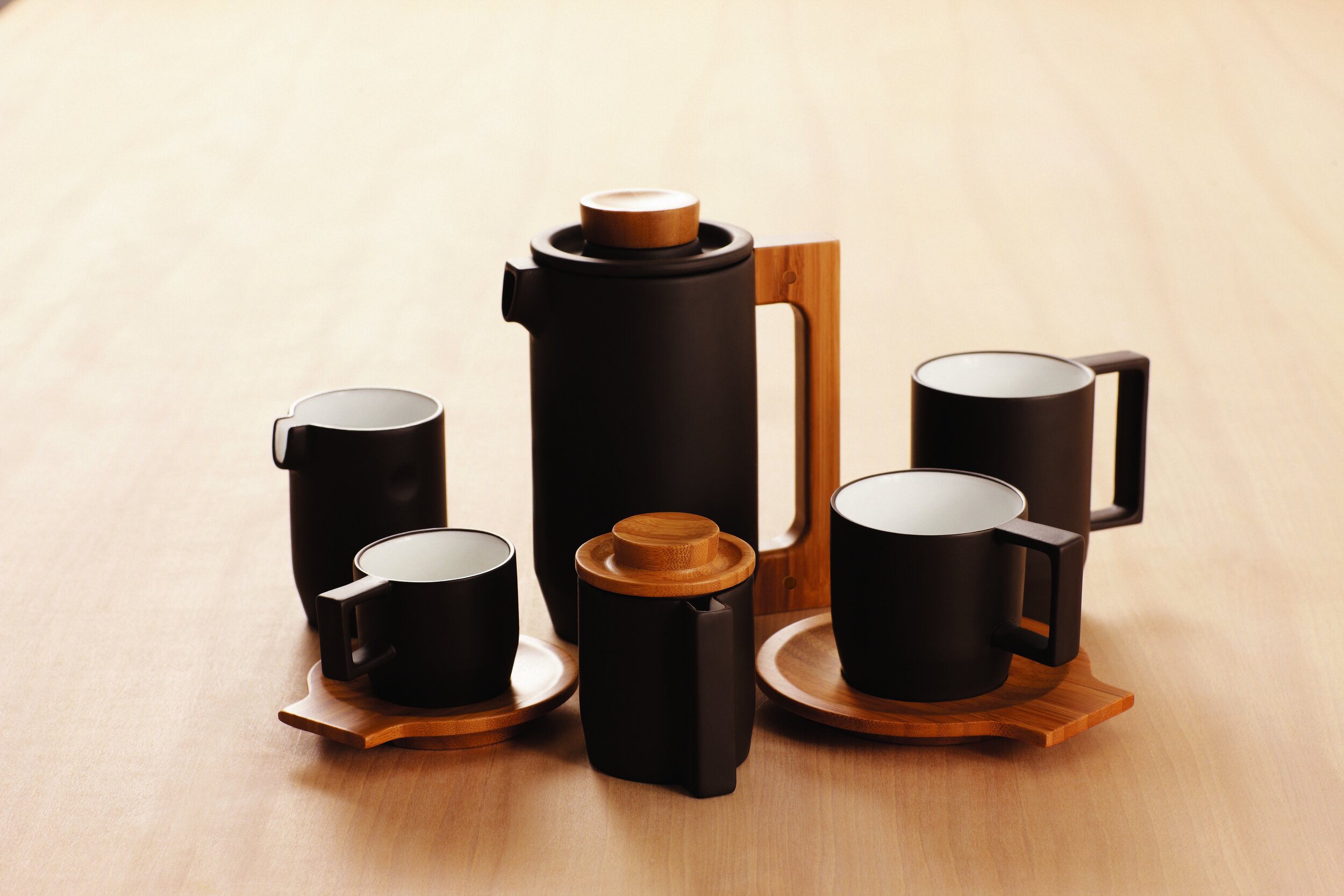
Purple clay is natural clay unique to China, discovered around Taihu in Jiangsu during the Northern Song Dynasty. (1000-1200 A.D.). When fired, the purple clay assumes a fine and sandy texture that retains the temperature of the tea held inside longer than ordinary ceramics. Teapots made out of Zisha clay are highly prized because their unglazed surface absorbs traces of the beverage, creating a more complex flavor.
Reminders of the Earth’s Warmth and Changes Over Time JIA Inc. partnered with Gearlab from Taiwan to create a one-of-a-kind coffee pot that makes use of Purple clay’s unique material qualities. The unglazed sandy texture of natural purple clay is reminiscent of the warmth of the earth. After extended use, the purple clay coffee pot takes on the fragrance of your preferred coffee blend and the warmth of your hands. Your memories will fill this coffee pot and cup, making them your own.
Materials:Yixin zisha, Bamboo, PC, Silicone, Stainless steel
Designer:Gearlab
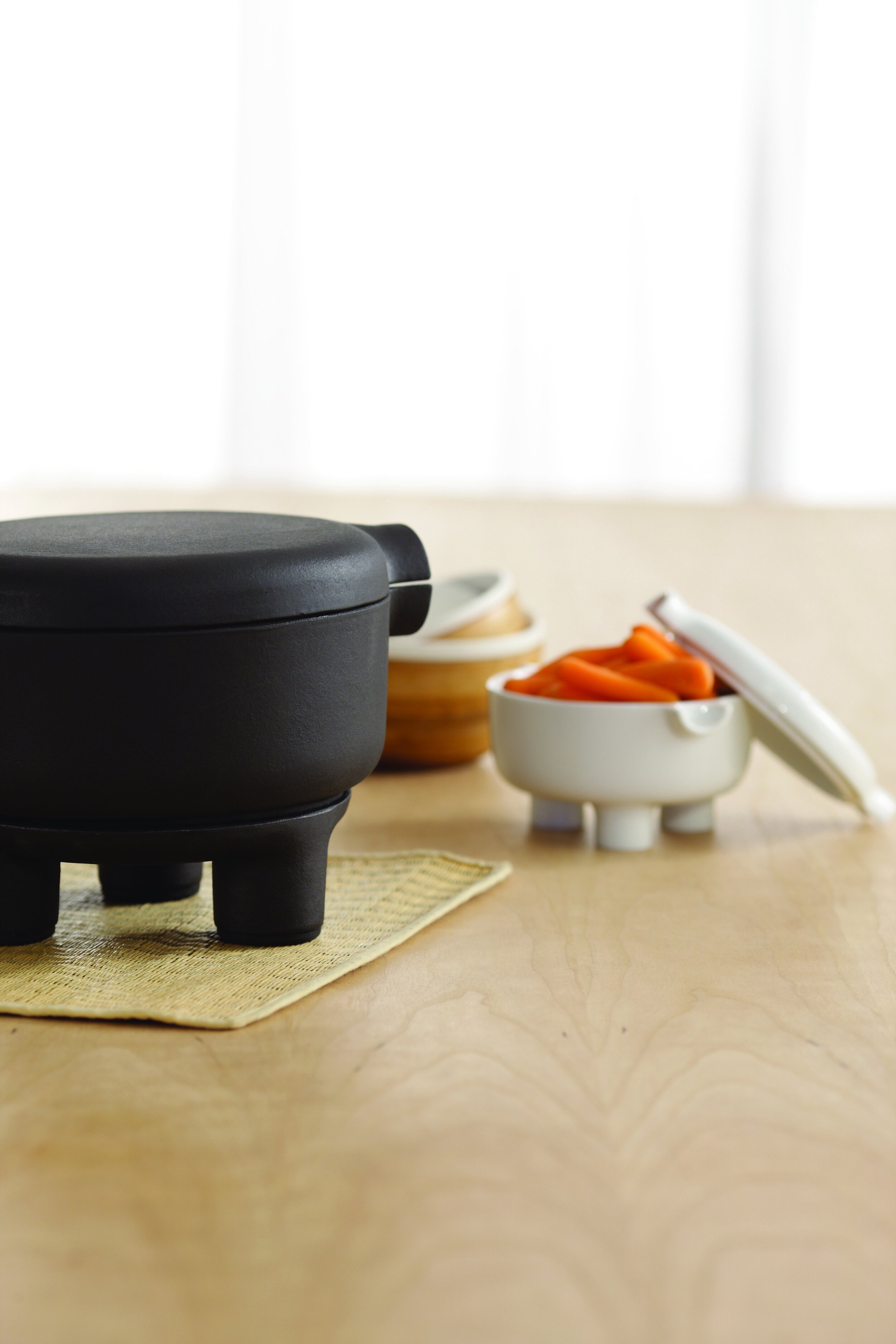
Ding, the oldest cookware in Chinese culture, is the origin of culinary arts and all flavors.Inspired by ancient Chinese bronze Ding, designer seamlessly merged the classic shape with practical function, creates a Ding that fits modern cooking needs.
To facilitate modern cooking requirements, Ding Casserole has a flat base while legs have been incorporated in a separate stand. The enameled interior contrasts with the matte black exterior surface, providing a functional cooking surface.
Materials:Enameled Cast iron, Silicone/Fireproof ceramic, Silicone
Designer:Office for Product Design
Wallpaper* Design Award
Cookware is used in everyday life to create the taste found in home-cooked food. Fine cast texture, lightweight aluminum, simple lines and graceful curves come together in the design that feels just right. The rustic, unpretentious, undisturbed and low-key style brings out the colors and the tastiness of cuisines. Cooking fumes and food aromas greet us: this is what home smells like!
The great Japanese industrial designer, Naoto Fukasawa, observed carefully the instincts and intuition when people prepare dishes using cooking tools and kitchen utensils, and designed cookware sets for JIA Inc. that are suitable for people to use at home. Three different models of cookware with three sets of cookware accessories are suitable for use in every kitchen.
They make it easier to create cuisines from around the world and to cook various everyday dishes that satisfy the tastes of every family member.
Materials:Cast aluminum, Bakelite, Teflon™ Profile / Nylon
Designer:Naoto Fukasawa
Design Anthology Award
JIA hand drip coffee is carefully designed to fuse the eastern design language with western lifestyle while upgrading the function to bring a better coffee brewing experience and taste to daily life.
The JIA Inc. hand drip coffee includes two types of double-wall ceramic drippers, server, dripper sit & ring, together completes all you need for a cup of perfect coffee. The design of the double-wall porcelain dripper presents excellent heat retention and ensures an even brewing temperature and is also suitable for beginner to make an outstanding coffee.
Materials:Ceramic/ Mouth blown glass/ Bamboo
Designer:Shikai Tseng
Designpreis Deutschland
The JIA Steamer with terracotta steamer basket can steam and boil at the same time. Save time and space. The casserole also works perfectly as a simple stew pot.
The method of steaming food was invented during the Han Dynasty thousands of years ago. Legend has it that General Han Xin made cooking utensils from bamboo and wood to cook food with steam. Through history, steaming has evolved to be one of the most iconic and essential cooking techniques in the Chinese culinary lexicon.
The steamer pot and lid are made from fireproof ceramic, which has excellent heat resistance compared to regular stoneware, making it less likely to crack at higher temperatures. The JIA steamer pot can be used on open flame gas stoves and in both conventional and microwave ovens.
Materials:Fireproof ceramic
Designer:Office for Product Design
The method of steaming food was invented during the Han Dynasty thousands of years ago. Legend has it that General Han Xin made cooking utensils from bamboo and wood to cook food with steam. Through history, steaming has evolved to be one of the most iconic and essential cooking techniques in the Chinese culinary lexicon.
The steamer basket replaces the traditional bamboo base with terracotta. This natural material has efficient liquid absorbing characteristics, meaning it can absorb any excess moisture generated during steaming, ensuring that the food is perfectly moist.
The steamer pot and lid are made from fireproof ceramic, which has excellent heat resistance compared to regular stoneware, making it less likely to crack at higher temperatures. The JIA steamer pot can be used on open flame gas stoves and in both conventional and microwave ovens.
Materials : Cedar wood, Terra cotta
Designer : Office for Product Design
A family of simple teacups which initially seem identical but soon show their own subtle personality. The basic silhouette of 'Persona' is a contemporary reinterpretation of the traditional Chinese tea cup with lid. Closer inspection reveals a series of individual texture like patterns which are almost more tactile than visual.
The true quality of these cups are only fully appreciated once held in the hand or up against the light, when the translucency of the delicate porcelain accentuatesthe patterns.
Materials:Porcelain
Designer:Office for Product Design
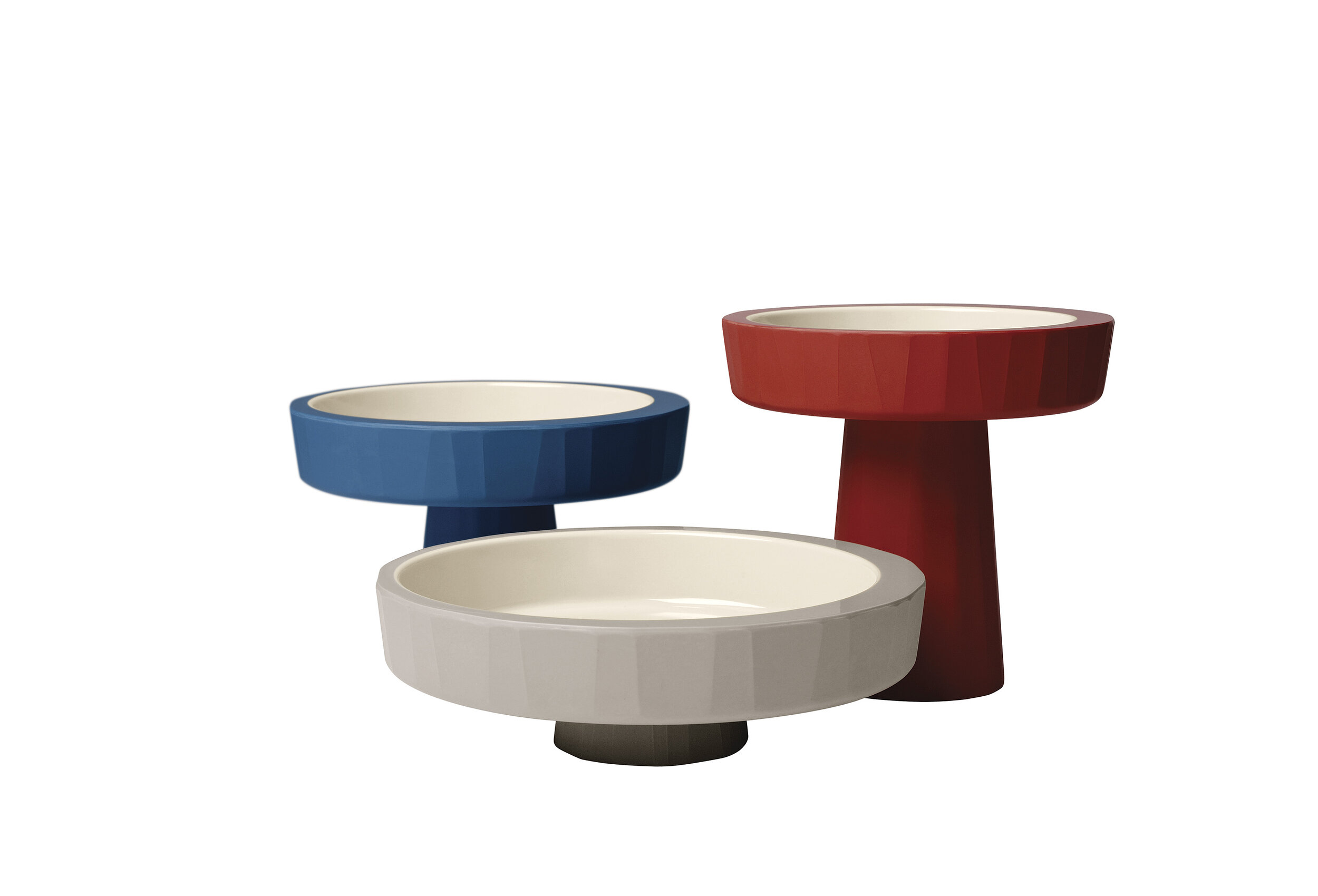
Chinese have been very meticulous about the etiquettes for different occasions. The high-stemmed “Dou” plates were dinnerware from early Qin dynasty (2033-1562BC) used for ceremonies.The tall and slender stem of the plate was designed to accommodate the sitting postures of the nobles at the time when the object “chair” was not invented.The designer takes the form of the ancient Dou plate and modernizes it with irregular sanded surface to also give it another sensation to touch.
Materials:Bio degradable EPA Melamine
Designer:KateChungDesign
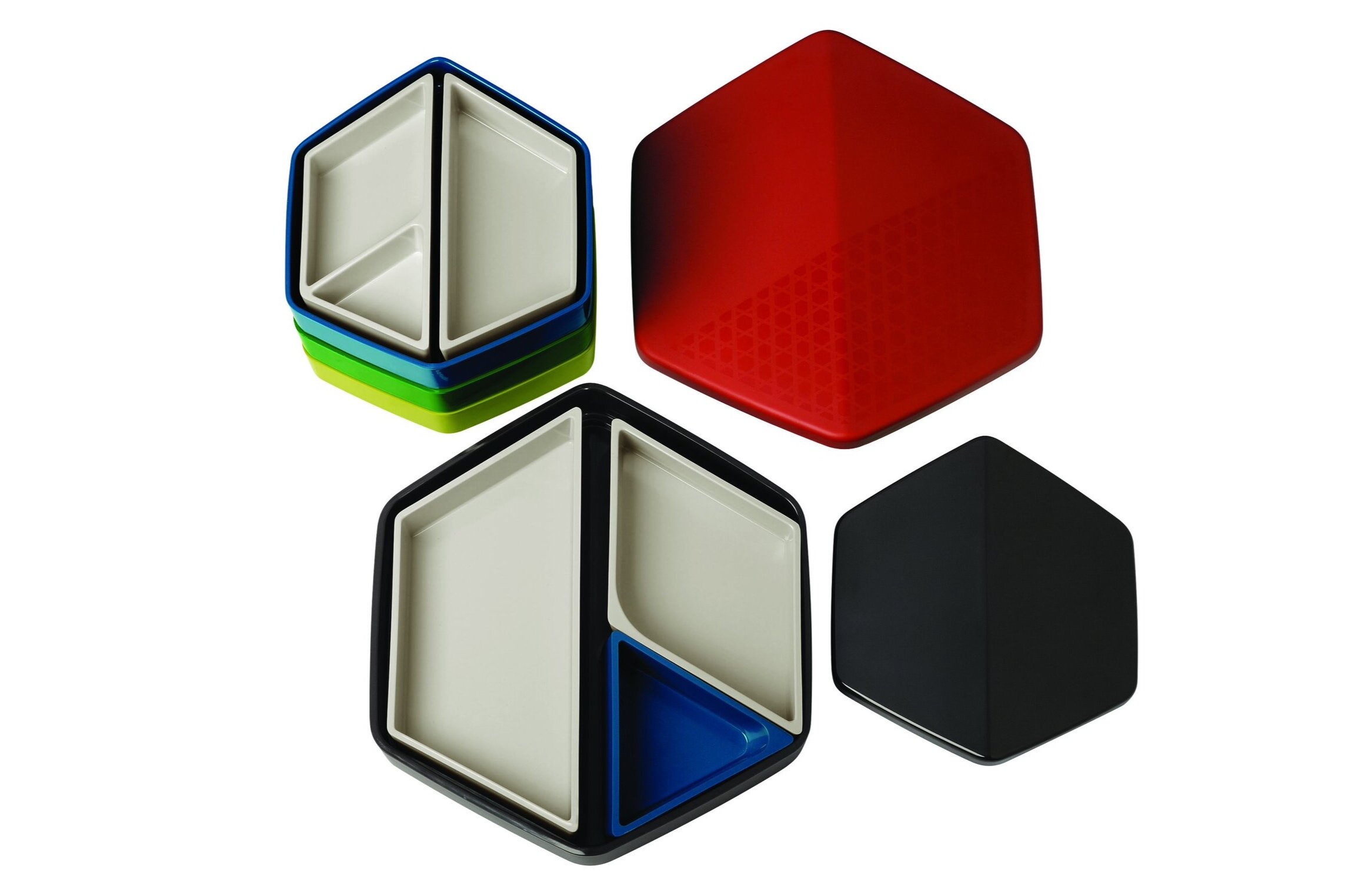
Snack boxes originated from the Jing dynasty(220-581 A.D). In Ming dynasty (1368-1644 AD), it was called “Quan” boxes, meaning ‘completion’ and “together”. “Quan boxes” that carried snacks and candies became widely used for festive or celebrative occasions, meaning “perfection” and “completion”.
Materials:Bio degradable EPA Melamine
Designer:KateChungDesign
Design Plus
The JIA Steamer with terracotta steamer basket can steam and boil at the same time. Save time and space. The casserole also works perfectly as a simple stew pot.
The method of steaming food was invented during the Han Dynasty thousands of years ago. Legend has it that General Han Xin made cooking utensils from bamboo and wood to cook food with steam. Through history, steaming has evolved to be one of the most iconic and essential cooking techniques in the Chinese culinary lexicon.
The steamer pot and lid are made from fireproof ceramic, which has excellent heat resistance compared to regular stoneware, making it less likely to crack at higher temperatures. The JIA steamer pot can be used on open flame gas stoves and in both conventional and microwave ovens.
Materials:Fireproof ceramic
Designer:Office for Product Design
The method of steaming food was invented during the Han Dynasty thousands of years ago. Legend has it that General Han Xin made cooking utensils from bamboo and wood to cook food with steam. Through history, steaming has evolved to be one of the most iconic and essential cooking techniques in the Chinese culinary lexicon.
The steamer basket replaces the traditional bamboo base with terracotta. This natural material has efficient liquid absorbing characteristics, meaning it can absorb any excess moisture generated during steaming, ensuring that the food is perfectly moist.
The steamer pot and lid are made from fireproof ceramic, which has excellent heat resistance compared to regular stoneware, making it less likely to crack at higher temperatures. The JIA steamer pot can be used on open flame gas stoves and in both conventional and microwave ovens.
Materials : Cedar wood, Terra cotta
Designer : Office for Product Design
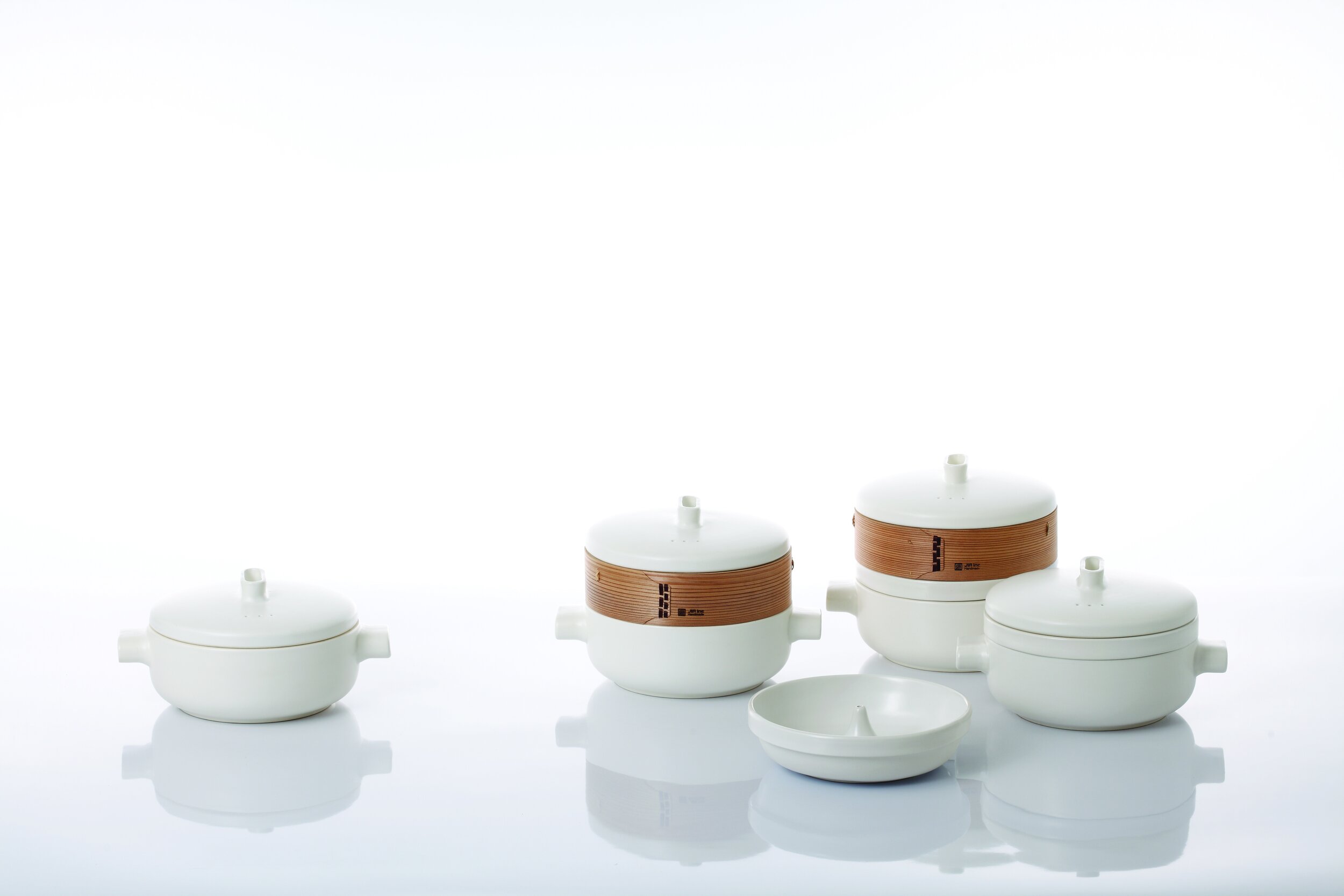
Cooking with Steam
Steaming food has always been at the core of Chinese gastronomy.
The Steam Poacher, paired with the original JIA Steamer Set, elevating the technique to new heights and offering a range of exciting new culinary possibilities.
The JIA Steam Poacher is inspired by the concept of steamer pots from China's Yunnan province, which circulate the steam to distribute the heat more evenly. This method of cooking preserves the natural flavor of the food along with the vitamins and minerals, which are often lost with other forms of cooking.
The JIA Steam Poacher enables you to effortlessly explore new and creative culinary ideas. From enticing appetizers and satisfying entrées to specialty desserts you will enjoy the pleasure of steam
cooking to the fullest.
Materials:Stoneware
Designer:Office for Product Design
A truly authentic wok designed for use in the modern home.
Authenticity is the keyword for the Wok and Utensils designed by Office for Product Design. Carbon steel, stainless steel and natural magnolia wood are beautifully crafted together in harmony. Carbon steel is a material long used for making woks. It is strong, durable and conducts heat quickly and evenly. No artificial coating is used, meaning it can be seasoned to create a natural non-stick coating.
Magnolia grows slowly and gives a wood characterized for its strength, density and hardness. The designer chose it to go with carbon steel to form this unpretentious, highly functional wok design. The Wok and utensils invites you to try out creative Chinese home cuisine and makes a pleasing focal point when presented on the table.
Materials:Carbon steel, Magnolia wood, 18/10 Stainless Steel
Designer:Office for Product Design
A family of simple teacups which initially seem identical but soon show their own subtle personality. The basic silhouette of 'Persona' is a contemporary reinterpretation of the traditional Chinese tea cup with lid. Closer inspection reveals a series of individual texture like patterns which are almost more tactile than visual.
The true quality of these cups are only fully appreciated once held in the hand or up against the light, when the translucency of the delicate porcelain accentuatesthe patterns.
Materials:Porcelain
Designer:Office for Product Design
“滿”,meaning “abundance”, is a happy word in Chinese culture. It is often written in calligraphy on a piece of red paper and stuck outside of rice containers in the beginning of a new year to wish for a good year. While one of the key Chinese philosophies describes that the earth is square and the heaven is round to manifest the stability and the mobility, the yin and yang, designer Kate takes the line and uses terra cotta and silicone lid to translate the thinking into modern airtight canisters with a touch of Zen. Also, with a whisk of imagination, you can turn them into a sleek vase.
Materials :Terra cotta, Silicone
Designer:KateChungDesign
Red Dot Design Award
A truly authentic wok designed for use in the modern home.
Authenticity is the keyword for the Wok and Utensils designed by Office for Product Design. Carbon steel, stainless steel and natural magnolia wood are beautifully crafted together in harmony. Carbon steel is a material long used for making woks. It is strong, durable and conducts heat quickly and evenly. No artificial coating is used, meaning it can be seasoned to create a natural non-stick coating.
Magnolia grows slowly and gives a wood characterized for its strength, density and hardness. The designer chose it to go with carbon steel to form this unpretentious, highly functional wok design. The Wok and utensils invites you to try out creative Chinese home cuisine and makes a pleasing focal point when presented on the table.
Materials:Carbon steel, Magnolia wood, 18/10 Stainless Steel
Designer:Office for Product Design
In the past, farmers from Northern China used naturally dried HULUs (gourds) to scoop water and wash rice. Tableware and eating utensils were considered essential family belongings that connected everyone to the same table, symbolizing harmony and a sense of home.
Today, people acquire material desires too easily, losing the sense of attachment to ordinary objects. JIA Inc. reinvents traditional family objects using porcelain to give new meaning to simple, rustic utensils and to encourage the reflection of the true meaning of family and home.
Designer Yung-Ho Chang breaks the rule of 6 by 6 dinnerware set. These organic shape plates offer an alternative way of preparing and sharing food in your own creative way.
Materials:Porcelain
Designer:Yung-Ho Chang/FCJZ
ELLE DECO International Design Award
In the past, farmers from Northern China used naturally dried HULUs (gourds) to scoop water and wash rice. Tableware and eating utensils were considered essential family belongings that connected everyone to the same table, symbolizing harmony and a sense of home.
Today, people acquire material desires too easily, losing the sense of attachment to ordinary objects. JIA Inc. reinvents traditional family objects using porcelain to give new meaning to simple, rustic utensils and to encourage the reflection of the true meaning of family and home.
Designer Yung-Ho Chang breaks the rule of 6 by 6 dinnerware set. These organic shape plates offer an alternative way of preparing and sharing food in your own creative way.
Materials:Porcelain
Designer:Yung-Ho Chang/FCJZ
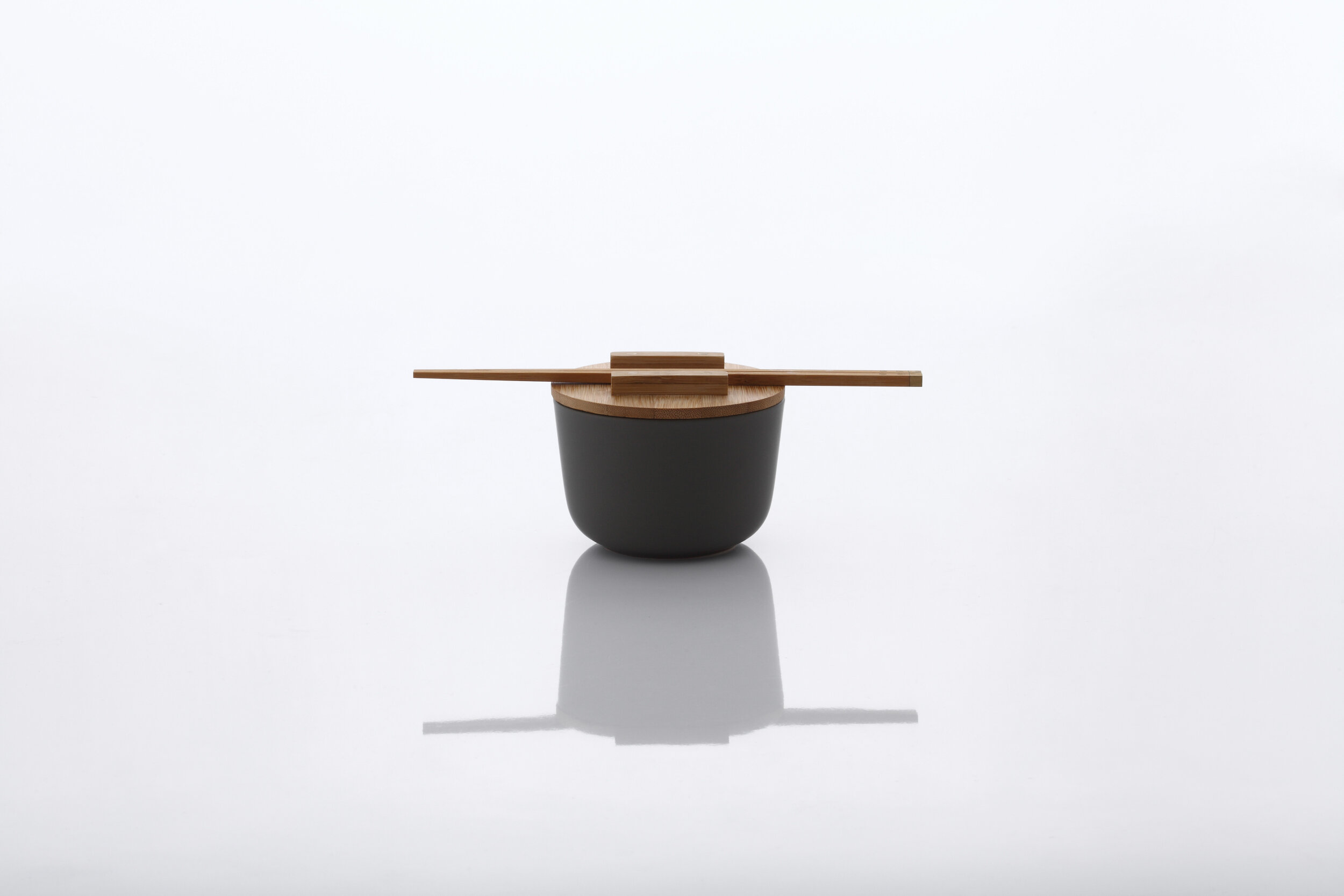
Inspired by traditional Korean Dolsot stone bowl for bimbimbap, designer Seung Yong Song reinterprets the warmest and fondest memories in this simple stoneware bowl. Though hard as stone, this bowl carries the joy and tenderness felt at home. The bamboo lid, once lifted, reveals the steam from food reminiscent happiness from family gathering. Pleasure is an effortless thing, and this simple bowl brings back the simplest satisfaction in life.
Materials:Bamboo、stoneware、brass
Designer:Seung Yong Song
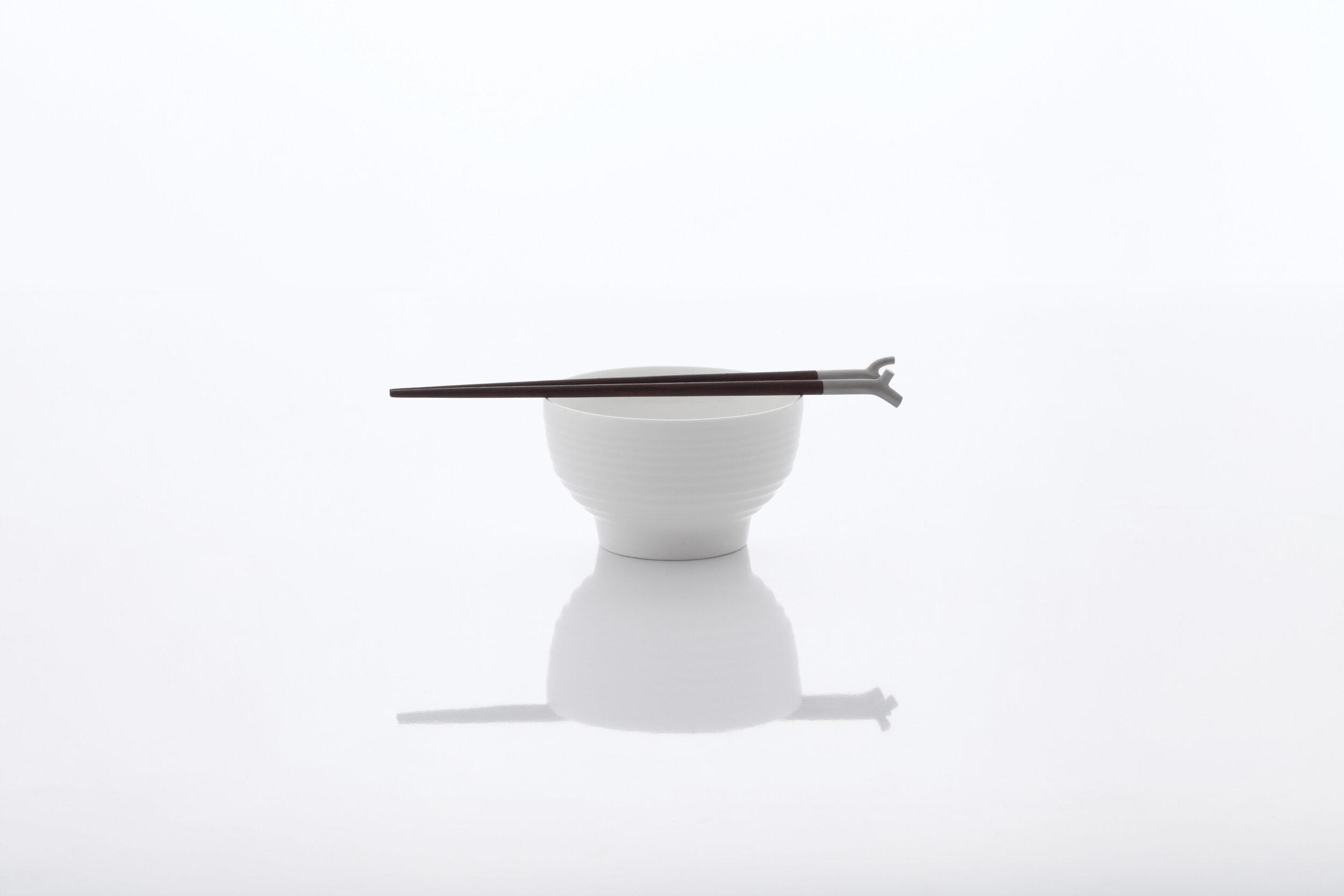
In searching for the origin of the bowl and chopsticks, designer Masayuki Kurokawa is inspired by the two elements that nurture all living beings, wind and soil or in this native language “Fudo”. The result are a bowl with profile that is a direct yet subtle symbolization of palms slowly closing in on mouth and a pair of chopsticks represents twigs, which are perhaps the ultimate origin of these two utensils.
Shaped by nature and patterned by wind and soil, “Fudo” is a duo of bone china bowl that intuitively fit within your palms, and a pair of humble chopsticks in ebony wood that impeccably pick up flavors offered by earth.
Materials:Bone china/ Ebony、Stainless steel
Designer:Masayuki Kurokawa
上海家居風尚大獎
The JIA Steamer with terracotta steamer basket can steam and boil at the same time. Save time and space. The casserole also works perfectly as a simple stew pot.
The method of steaming food was invented during the Han Dynasty thousands of years ago. Legend has it that General Han Xin made cooking utensils from bamboo and wood to cook food with steam. Through history, steaming has evolved to be one of the most iconic and essential cooking techniques in the Chinese culinary lexicon.
The steamer pot and lid are made from fireproof ceramic, which has excellent heat resistance compared to regular stoneware, making it less likely to crack at higher temperatures. The JIA steamer pot can be used on open flame gas stoves and in both conventional and microwave ovens.
Materials:Fireproof ceramic
Designer:Office for Product Design
The method of steaming food was invented during the Han Dynasty thousands of years ago. Legend has it that General Han Xin made cooking utensils from bamboo and wood to cook food with steam. Through history, steaming has evolved to be one of the most iconic and essential cooking techniques in the Chinese culinary lexicon.
The steamer basket replaces the traditional bamboo base with terracotta. This natural material has efficient liquid absorbing characteristics, meaning it can absorb any excess moisture generated during steaming, ensuring that the food is perfectly moist.
The steamer pot and lid are made from fireproof ceramic, which has excellent heat resistance compared to regular stoneware, making it less likely to crack at higher temperatures. The JIA steamer pot can be used on open flame gas stoves and in both conventional and microwave ovens.
Materials : Cedar wood, Terra cotta
Designer : Office for Product Design
The more the wheel roles, the more flavorful life is. The more flavorful life is, the closer you are to home. Just a few rolls from the wooden wheel pestle, keeps homemade flavors on your mind.
Inspired by Chinese ancient ceramic tea mortars, “The Prep, Rolling Mortar” is designed to crush mixed spices, tea leaves, Chinese herb medicines, and so on. Prepping for meals or condiments, it’s as easy as rolling of a mortar.
Materials:Porcelain, Oak, Silicone
Designer:JIA Design Team – Spencer Hung
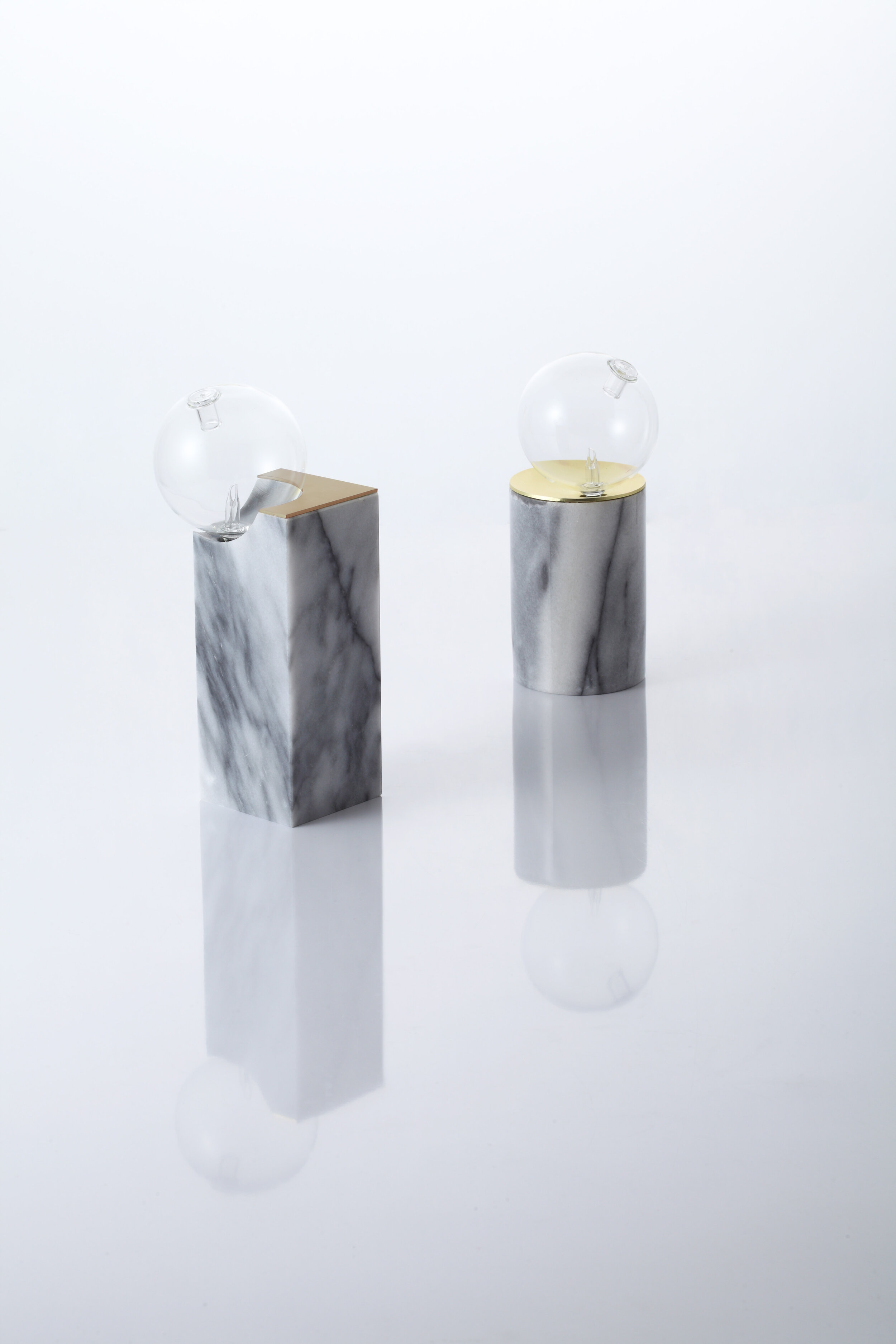
The legend has it that in Chinese mythology Nuwa is the guardian of Heaven and Earth, hand-crafted mankind from clay. She repaired the pillars of heaven and forged 36501 pieces of mystic stones to patch up the azure sky in order to save human lives. And the “JIA Aroma Aureole Cold Air Diffuser” is derived from this beautiful ancient fable. The essential oil is extracted from the plants that grow on the planet and disperses all-natural aroma that flows all around and lingers between heaven and earth.
Materials:Glass, Brass-plated steel , Marble, Wood, Electric motor and accessories
Designer:JIA Design Team – Spencer Hung
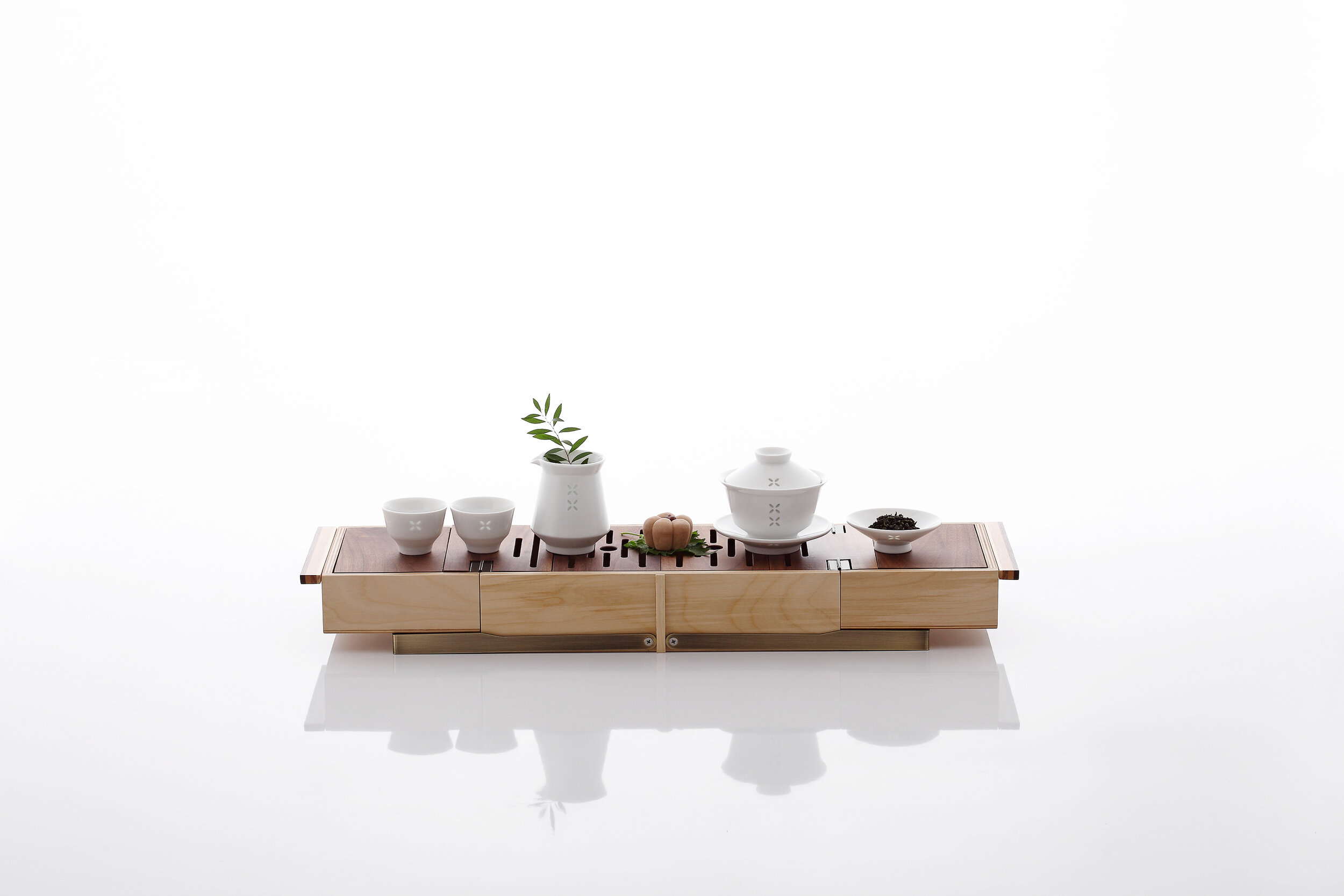
Tea tasting is a prestigious pastime of the elites. It settles the mind and tends to the health of body and soul. In ancient China outdoor tea tasting was a common social event since the Song and Ming Dynasty. Inspired by the western style picnic basket the Tea Box is designed for ample storage as well as easy-to-carry.
The art of tea ceremony is like graceful dance choreography. As the Tea Box unfolds and transforms into a platform. Teaware is delicately arranged on top just like dancers move elegantly on stage. The spirit of tea ceremony is so exquisite and in depth that brings us back in time with every sip of tea.
Materials:Bamboo, Maple Wood, and Various Woods,
Stainless steel plated in brass color, hinge in antique brass
Designer:JIA Design Team – Wuba Yang
The melancholy of flowers is uncovered under light spring drizzle. Whilst willows in summer sway through the cool breeze. Autumn sees the reflection of bright moonlight in glasses. And during winter, the warmth of spring is again eagerly awaited.
Admire the landscape of four seasons while savoring each season's
specialty. Different tints of the glass layered out display an example of beauty just as in a calligraphic painting, while the clear translucence of a spring plate, a summer glass, an autumn bowl and a winter cup complete the full cycle of another year. "Four Seasons Glass Set" is your essential companion to enjoy each season. From aperitif and beverage to main course and dessert, this set completes a table of delectable gastronomy with rich visual beauty and flavors all in your hands.
Materials:Glass
Designer:Pili Wu
HKDC Award
A truly authentic wok designed for use in the modern home.
Authenticity is the keyword for the Wok and Utensils designed by Office for Product Design. Carbon steel, stainless steel and natural magnolia wood are beautifully crafted together in harmony. Carbon steel is a material long used for making woks. It is strong, durable and conducts heat quickly and evenly. No artificial coating is used, meaning it can be seasoned to create a natural non-stick coating.
Magnolia grows slowly and gives a wood characterized for its strength, density and hardness. The designer chose it to go with carbon steel to form this unpretentious, highly functional wok design. The Wok and utensils invites you to try out creative Chinese home cuisine and makes a pleasing focal point when presented on the table.
Materials:Carbon steel, Magnolia wood, 18/10 Stainless Steel
Designer:Office for Product Design
“滿”,meaning “abundance”, is a happy word in Chinese culture. It is often written in calligraphy on a piece of red paper and stuck outside of rice containers in the beginning of a new year to wish for a good year. While one of the key Chinese philosophies describes that the earth is square and the heaven is round to manifest the stability and the mobility, the yin and yang, designer Kate takes the line and uses terra cotta and silicone lid to translate the thinking into modern airtight canisters with a touch of Zen. Also, with a whisk of imagination, you can turn them into a sleek vase.
Materials :Terra cotta, Silicone
Designer:KateChungDesign
The JIA Steamer with terracotta steamer basket can steam and boil at the same time. Save time and space. The casserole also works perfectly as a simple stew pot.
The method of steaming food was invented during the Han Dynasty thousands of years ago. Legend has it that General Han Xin made cooking utensils from bamboo and wood to cook food with steam. Through history, steaming has evolved to be one of the most iconic and essential cooking techniques in the Chinese culinary lexicon.
The steamer pot and lid are made from fireproof ceramic, which has excellent heat resistance compared to regular stoneware, making it less likely to crack at higher temperatures. The JIA steamer pot can be used on open flame gas stoves and in both conventional and microwave ovens.
Materials:Fireproof ceramic
Designer:Office for Product Design